
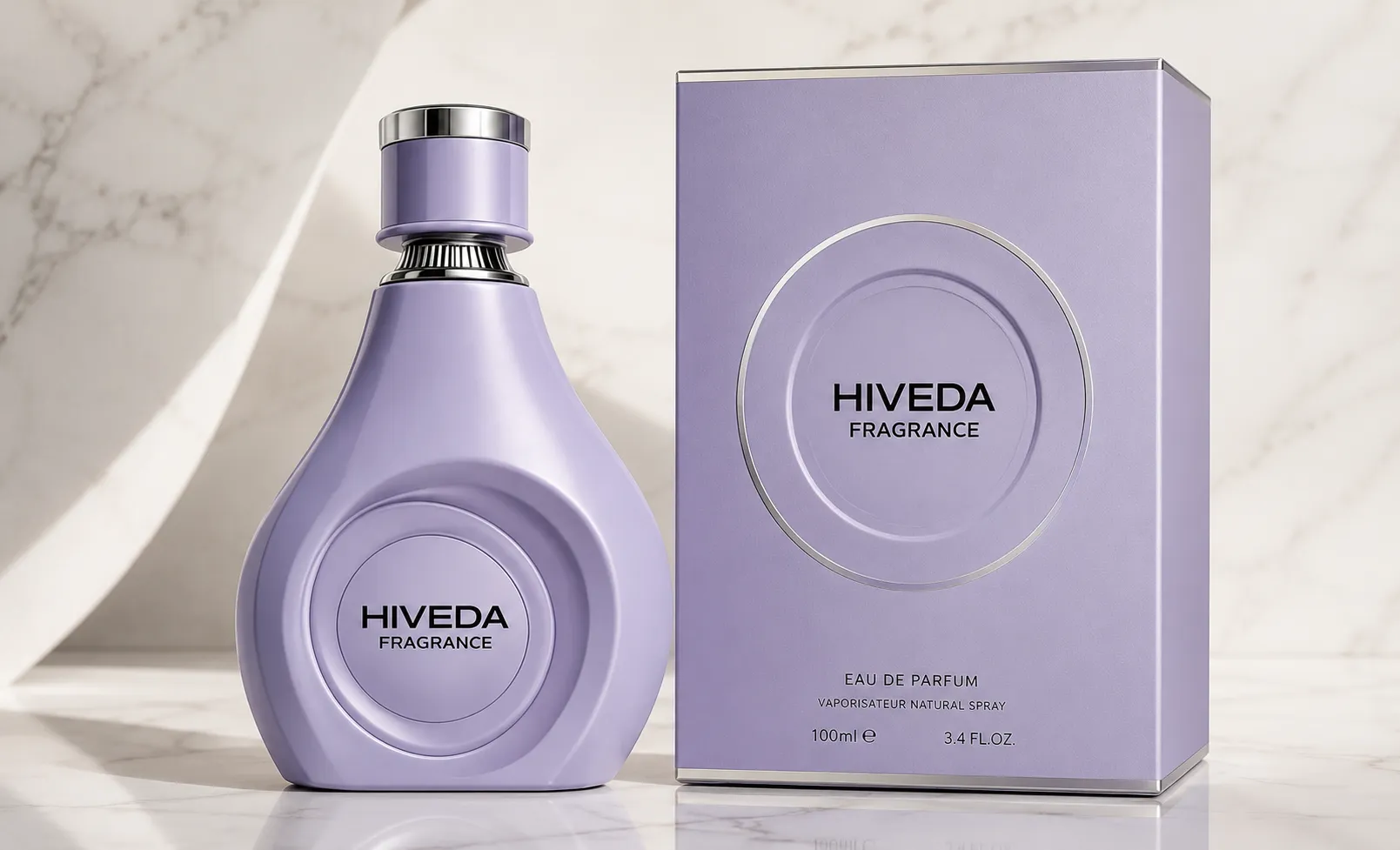
BD-PF-01 is a soft sculptural perfume bottle concept built around a rounded body, pastel surface direction, and a circular front identity area. The concept does not rely on a large paper label or decorative pattern. Its main identity comes from the bottle form itself: a wide lower body, a narrow neck, a cylindrical cap, and a circular medallion positioned at the center of the front face.
This type of design could work for a fragrance brand that wants a calm, tactile, and visually recognizable bottle direction. The bottle has enough softness for feminine, lifestyle, or boutique fragrance positioning, but the structured cap and metallic collar prevent it from feeling too simple. For brands exploring bespoke perfume bottle design, the strength of this direction is that the physical shape becomes the brand asset.
A Soft Bottle Concept With a Clear Front Identity
The first impression of BD-PF-01 comes from its rounded silhouette. The bottle is not a standard rectangle, cylinder, or flat oval. It has a teardrop-like body with a broader base and a narrowed upper section, giving the front profile a soft but stable shape.
The circular center detail gives the bottle a clear focal point. Instead of placing the logo on a flat label area, the concept creates a built-in brand zone. This is important because the bottle can still feel recognizable even if the printed information is minimal. The circular area gives the user’s eye a place to land, while the surrounding curved body adds depth and shadow.
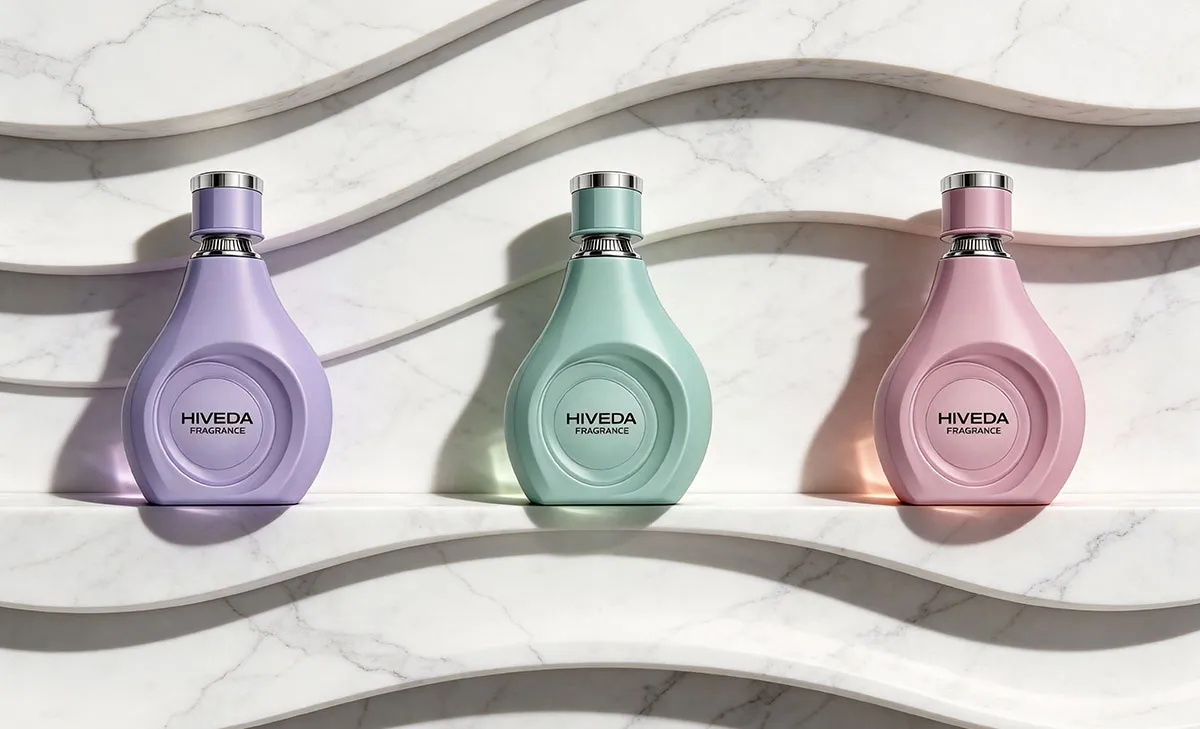
The pastel color direction also supports the form. Lavender, mint, and pink variations suggest a collection system where each fragrance could use the same bottle structure with a different coating color. This makes the concept useful for brands that want one consistent physical identity across several scents.
Why the Rounded Silhouette Works
The bottle’s wide lower section gives it visual weight. This matters for shelf presence because a soft pastel bottle can easily look too light if the structure is thin or narrow. Here, the broader base helps the bottle feel grounded. The flat bottom also gives the form a more practical standing posture, which is important for retail display, photography, and daily use.
The shoulder line rises smoothly from the body into the neck. This gradual transition makes the bottle feel more sculptural than a standard commercial perfume bottle. It also creates a tactile impression: the form looks like something a user could hold comfortably, rather than only view from the front.
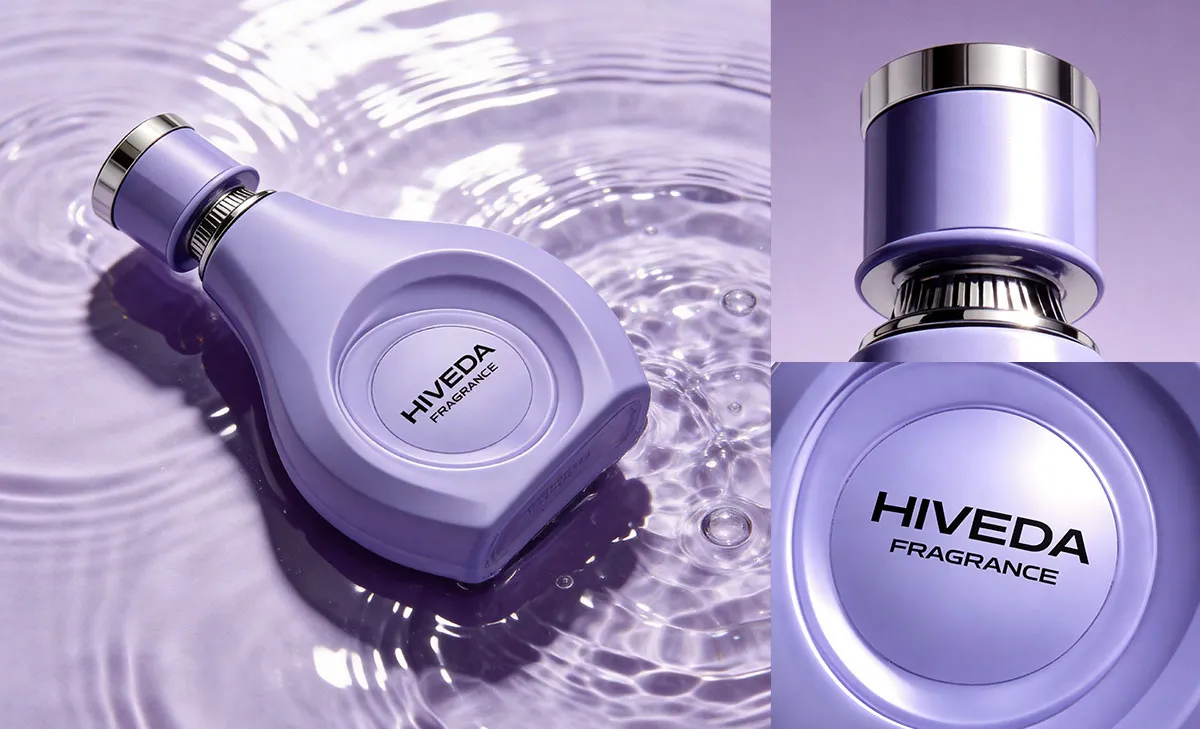
The cap adds a different type of structure. Its cylindrical shape is clean and upright, while the bottle body is curved and soft. This contrast is useful. A fully rounded bottle with a rounded cap could become too gentle and lose definition. The straight cap, metallic rim, and ribbed collar create a controlled upper section that balances the bottle’s softer lower body.
The Circular Medallion as Brand Structure
The most important design element in BD-PF-01 is the circular medallion on the front. It functions as more than a logo placement area. It gives the bottle a repeated geometry: the cylindrical cap, the round collar rhythm, and the circular front detail all speak the same shape language.
This is useful for a bespoke perfume concept because it allows the brand identity to be developed through structure instead of surface graphics alone. A brand using this design language would need to consider how the logo, fragrance name, and any regulatory text are divided between the bottle and the outer packaging. The bottle front should stay visually clean so the circular detail remains strong.
The circular area could be developed in several ways during physical production. It could be recessed, raised, or formed as a shallow molded panel depending on mold feasibility and decoration goals. The logo could be printed directly, applied by decal, or treated with a subtle contrast finish. Each option would change the final appearance and should be tested before confirming production direction.
The matching box should support this structure rather than compete with it. A clean box with a repeated circular motif would help the bottle and packaging feel like one product set. For brands planning a complete perfume product line, this relationship between bottle shape and box graphics can make the concept easier to extend across future scents.
What Should Be Tested Before Sampling
If BD-PF-01 is developed physically, the first checks should focus on shape feasibility, visual balance, and component compatibility. The bottle body looks simple at first glance, but the curved shoulder, narrowed neck, and circular front structure all need careful 3D modeling.
The front medallion is especially important. Its depth, edge radius, and position will affect both appearance and mold development. If the circular detail is too shallow, it may not create enough shadow. If it is too deep, it may create production or decoration challenges. The design should be checked from front, side, and angled views before moving into sample development.
The cap and collar should also be tested as one system. The cap proportion needs to feel strong without overpowering the bottle. The ribbed collar creates a useful metallic transition, but its tolerance, assembly method, and compatibility with the pump should be reviewed early. A small change in cap height or collar width could shift the visual weight of the whole design.
- 3D modeling for bottle silhouette, shoulder curve, and front medallion depth
- Glass wall thickness and base stability review
- Cap, pump, and collar compatibility check
- Pastel coating test for color consistency and surface feel
- Logo application test inside the circular identity area
- Outer box proofing and insert fit for the rounded bottle body
How HIVEDA Can Develop This Direction
For a concept like BD-PF-01, HIVEDA can help move the design from visual direction into practical development. The process could begin with bottle proportion refinement, 3D modeling, and 3D printing so the shape can be reviewed by hand before mold discussion.
After the main form is confirmed, the next stage would include cap development, collar detail review, surface decoration testing, and packaging structure proofing. The bottle and box should be developed as one product set because the circular identity system appears on both. Treating them separately could weaken the concept.
HIVEDA can also support the wider development route through fragrance product development services, including sample review, packaging proofing, filling and assembly planning, and export-ready coordination when required. For buyers comparing ready structures with bespoke development, this concept belongs closer to the bespoke route because its identity depends on custom shape, front structure, and cap relationship.
BD-PF-01 is strongest when it stays disciplined: soft body, clear circular identity, controlled cap detail, and quiet packaging. The result is a perfume bottle concept that could serve as a recognizable base for a pastel fragrance collection without needing heavy decoration to communicate its brand direction.
To discuss a similar bottle and packaging direction, brands can contact HIVEDA with concept references, target capacity, fragrance positioning, and preferred development route.