
BeauFort London fragrance brand is not trying to smell polite.
That is the point. In a fragrance market crowded with clean woods, soft musks, creamy ambers, and “quiet luxury” bottles, BeauFort London built power from discomfort. Smoke, salt, darkness, history, sea air, ink, metal, gunpowder, shadow. This is not easy fragrance language. It is demanding, visual, and strangely commercial because it gives the brand a hard edge.
For fragrance brands, the lesson is not to copy the darkness. The lesson is sharper: a fragrance product does not need to please everyone to be memorable. It needs a clear world, a disciplined product structure, and packaging that makes the risk feel intentional.
BeauFort London Is Not Trying to Be Easy
BeauFort London describes itself through intensity, narrative, and unusual olfactive material. The brand was founded by musician Leo Crabtree and grew from British maritime references, smoke, and darker cultural memory into a niche perfume house with a very specific atmosphere.
That matters because many young fragrance brands still make the same mistake: they soften every idea until nothing is left. The brief starts with “stormy,” “ritualistic,” or “dangerous,” then the final product becomes another wearable woody amber with a black cap.
BeauFort shows the value of keeping the original tension alive. If the scent is bold, the naming, visual direction, box, bottle, copy, and sampling journey must all agree. A dramatic perfume in timid packaging feels confused. A difficult perfume with a confident product world feels collectible.
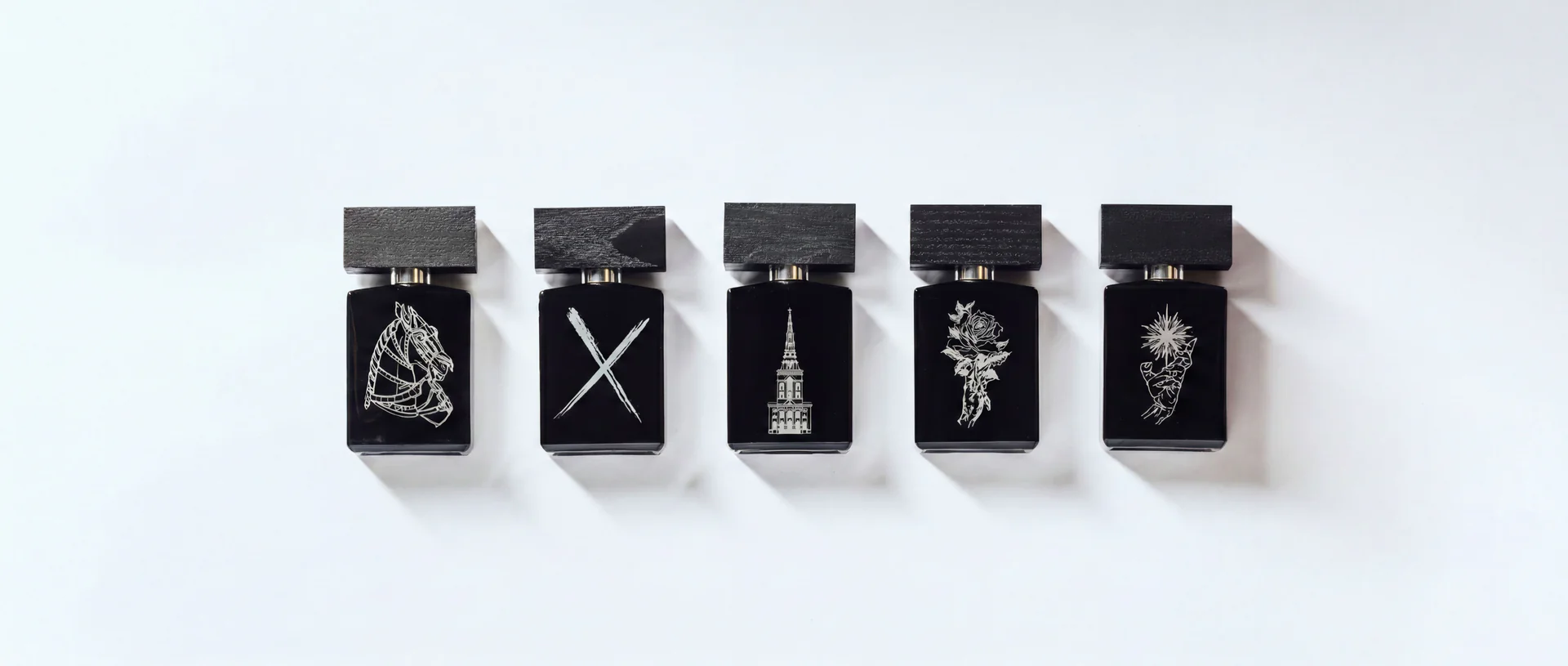
The commercial takeaway is simple. Do not ask whether every customer will like the concept. Ask whether the right customer will understand it quickly.
Make the Bottle Hold the Storm
Dark fragrance concepts often fail at the packaging stage. The brand mood says “storm,” but the bottle says “generic luxury.” That gap is expensive. It weakens retail impact, online photography, unboxing, and distributor confidence.
BeauFort London’s strength is the sense that the fragrance world arrives before the first spray. Its product presentation leans into a heavy, shadowed, almost literary mood. For product development teams, that does not mean every bottle needs a custom mold. It means every element should carry the same pressure.
A brand can create this through a stock bottle with stronger decoration: smoked glass, dense coating, black or gunmetal caps, restrained typography, textured labels, deep cartons, or a rigid box with a more ceremonial reveal. Another brand may need a bespoke bottle shape, custom cap, or heavier closure if the silhouette itself is central to the story.
This is where the ready design versus bespoke decision becomes practical. A ready design perfume bottle can work when the brand’s identity comes from color, finish, label, cap, and box structure. A bespoke perfume bottle design makes more sense when the bottle shape must become the signature.
Sampling Matters When the Scent Is Difficult
The more challenging the fragrance, the more important the sampling system becomes.
A clean floral musk can often sell from a simple product page. A smoky, salty, animalic, mineral, or resinous perfume needs a slower introduction. The customer may need to smell it twice. A buyer may need to test how it behaves on blotter, skin, fabric, and in a retail setting. A distributor may need a compact way to explain the concept to stores.
BeauFort London uses discovery sets and travel formats as part of the product journey. This is not just a consumer convenience. It is a risk-management tool. It lowers the barrier to trial and gives complex fragrances a better chance to be understood.
For fragrance brands, discovery sets should not be treated as leftover miniatures. They need their own packaging logic: vial size, spray quality, label readability, carton insert, scent order, naming hierarchy, and redemption or conversion plan. A poor sample set makes a serious fragrance feel careless.

If your perfume concept needs education, build that education into the format. Sample first. Then sell the full bottle.
A Small Collection Can Still Feel Large
BeauFort London is a useful reminder that collection depth is not the same as SKU count.
A brand can feel substantial with a focused number of perfumes if the collection logic is strong. BeauFort’s world is arranged through chapters, themes, and atmosphere. That gives the range structure. It also helps each fragrance feel like part of a bigger system rather than a random launch.
This is useful for new fragrance brands, private label buyers, and importers planning a first line. Launching ten scents is not automatically more premium. It often creates production pressure, inventory risk, and a weaker story. Three to five well-framed SKUs can feel more confident, especially when each product has a clear role.
A tight first collection might include one hero scent, one more wearable bridge scent, one experimental scent, and one travel or discovery format. For home fragrance brands, the same logic can extend into scented candles or reed diffusers without diluting the core perfume story.
The mistake is launching extensions too early. The smart move is building a visual and packaging system that can grow: same bottle language, compatible boxes, consistent label hierarchy, and enough flexibility for limited editions or seasonal drops.
Turn a Dangerous Idea into a Buildable Product
Bold fragrance ideas are exciting in a moodboard. They become harder when glass, caps, decoration, filling, boxing, assembly, and export enter the conversation.
A dark coated bottle may scratch. A heavy cap may affect tolerance. A textured label may lift on curved glass. A black carton may show scuffing during shipping. A dramatic insert may look beautiful in a render and slow down assembly in real production. The stronger the concept, the more important sampling becomes.
This is the production lesson behind brands like BeauFort London. A powerful world only works when the physical product can carry it consistently. The bottle must photograph well, fill cleanly, close properly, survive packing, and arrive looking intentional.
HIVEDA can help fragrance brands translate this kind of product direction into a practical development path. That may start with perfume bottle selection, a bespoke structure, cap and closure direction, surface decoration, box development, sample coordination, filling, assembly, and export-ready production support through HIVEDA’s fragrance product services.
The lesson is not “make everything dark.” The lesson is to make the product world decisive. If the fragrance is strange, let it be strange. If the story is intense, make the packaging strong enough to hold it. Then test every physical detail before the launch promise becomes public.
That is how a risky fragrance idea becomes a real product, not just a dramatic brief. For brand owners ready to move from concept to sample, starting the development conversation early is usually cheaper than fixing packaging mistakes later.