
Most perfume brands chase more: more launches, more flankers, more SKUs, more reasons to post. Ffern goes the other way. It makes fewer perfumes, releases them with a fixed seasonal rhythm, and turns waiting into part of the product experience.
That is why the Ffern perfume brand is worth studying. Not because every fragrance company should copy its ledger model. Most should not. The useful lesson is sharper: scarcity only works when the product, packaging, sampling, communication, and production calendar all support the same promise.
For fragrance brands, product development teams, packaging buyers, and private label buyers, Ffern is a reminder that a perfume launch is not just a scent in a bottle. It is a sequence of decisions that begins long before filling.
Ffern Turns Seasonality into a Product Brief
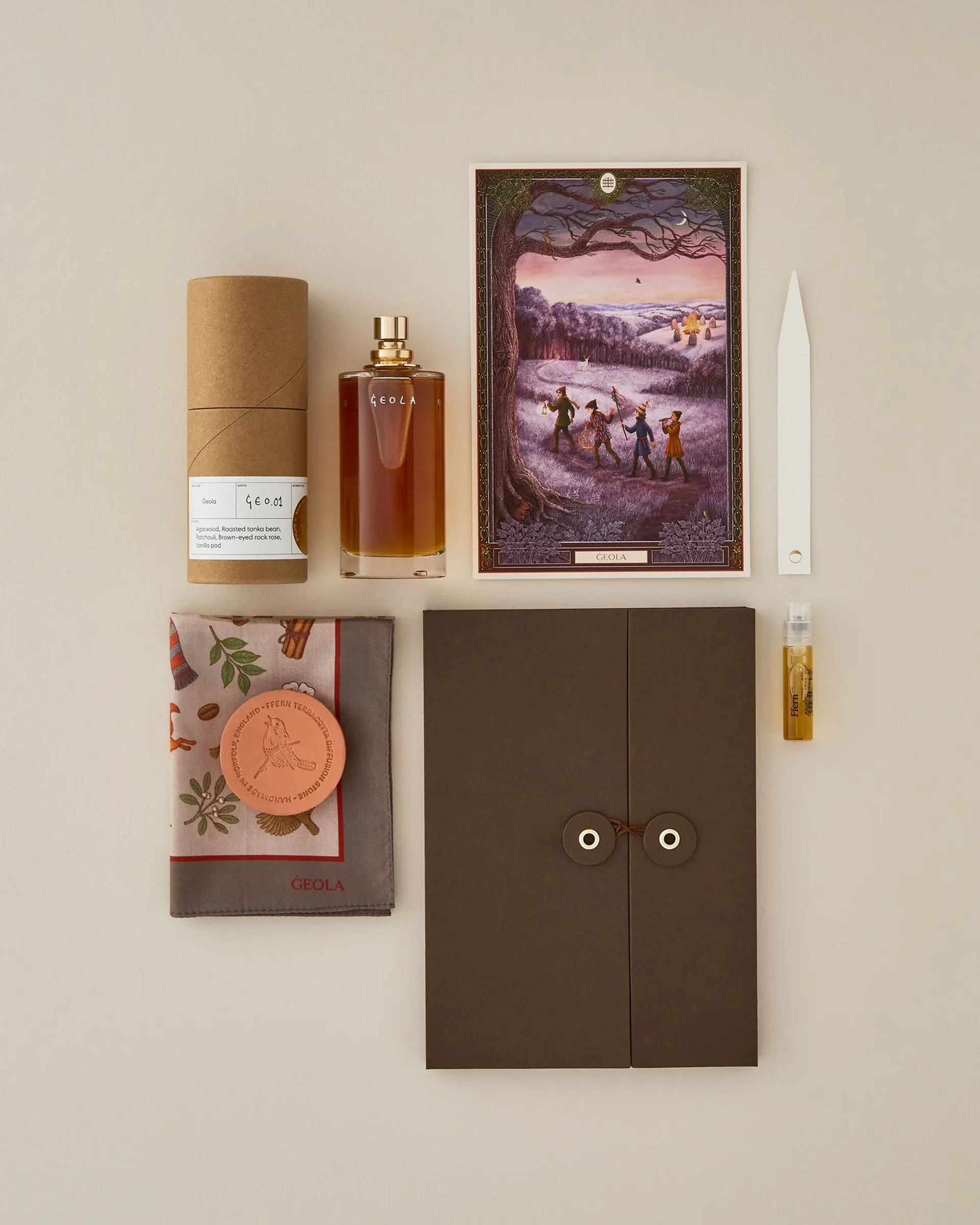
Seasonal fragrance is easy to say and hard to execute. Many brands treat seasonality as a marketing label: a spring floral, a summer citrus, an autumn amber. Ffern makes the season feel like the brief itself.
That changes the development question. Instead of asking, “What note family should we launch next?” a brand can ask, “What should this season feel like in the hand, on the shelf, in the box, and in the first ten seconds of opening?”
This is more useful than another abstract mood board. A seasonal brief can guide the bottle proportion, liquid tone, label stock, carton texture, insert card, sample format, and photography direction. If the scent is quiet and green, the packaging should not scream luxury through heavy metallic excess. If the release is warm, resinous, and winter-led, the paper, color, and closure can carry more weight.
For brands building a new perfume product line, this is the real lesson: do not brief the fragrance and packaging as separate projects. The customer experiences them together.
Scarcity Only Works When the Rhythm Is Clear
Limited edition is one of the most abused phrases in fragrance. Too often, it means nothing more than “we printed fewer boxes.” Buyers can feel that. So can distributors.
Ffern’s scarcity feels stronger because it is tied to a clear rhythm. The brand releases around the natural calendar, and the waiting mechanism reinforces that rhythm. The product is not simply unavailable; it is scheduled.
That distinction matters. Scarcity without structure creates frustration. Scarcity with structure creates anticipation.
For a growing perfume brand, the practical question is not “How do we make people wait?” It is “Can our development and production timeline support the promise we are making?” Seasonal drops require packaging approval dates, sample checks, filling windows, outer carton readiness, assembly planning, and export timing. Miss one of those, and the beautiful launch story turns into a customer service problem.
This is where many brands get stuck. They create a strong launch concept before checking bottle availability, decoration lead time, label tolerance, carton material, or filling schedule. A better approach is to map the release rhythm first, then choose the physical product route that can survive it.
For some brands, that may mean a ready design perfume bottle with excellent decoration and packaging discipline. For others, it may justify a slower bespoke route. The decision should come from the calendar, not from ego.
The Sample Vial Is Not a Small Detail
Ffern also understands something many niche fragrance brands forget: unfamiliar scents need a learning curve.
A consumer may love the idea of natural, seasonal, limited perfume. But when the full bottle arrives, there is still risk. Will it suit their skin? Will it feel wearable? Will the concept translate into daily use?
That is why sample vials, discovery formats, and testers are not minor add-ons. They are commercial risk management. They give the customer a way to try before committing emotionally to the full-size bottle. They also give the brand a more controlled first impression.
For product development teams, this should affect the brief from day one. A sample vial is not just a tiny container. It needs filling accuracy, label fit, closure reliability, secondary packaging, batch coordination, and a clear relationship to the full-size product. The same applies to travel sprays, discovery sets, and retailer tester kits.
For importers and distributors, sampling is even more important. A buyer may not approve a full rollout from a scent description alone. A neat sample system can shorten the education process and make the brand easier to present to retailers, hotels, gifting channels, or private label clients.
Restraint Makes Every Production Choice Visible
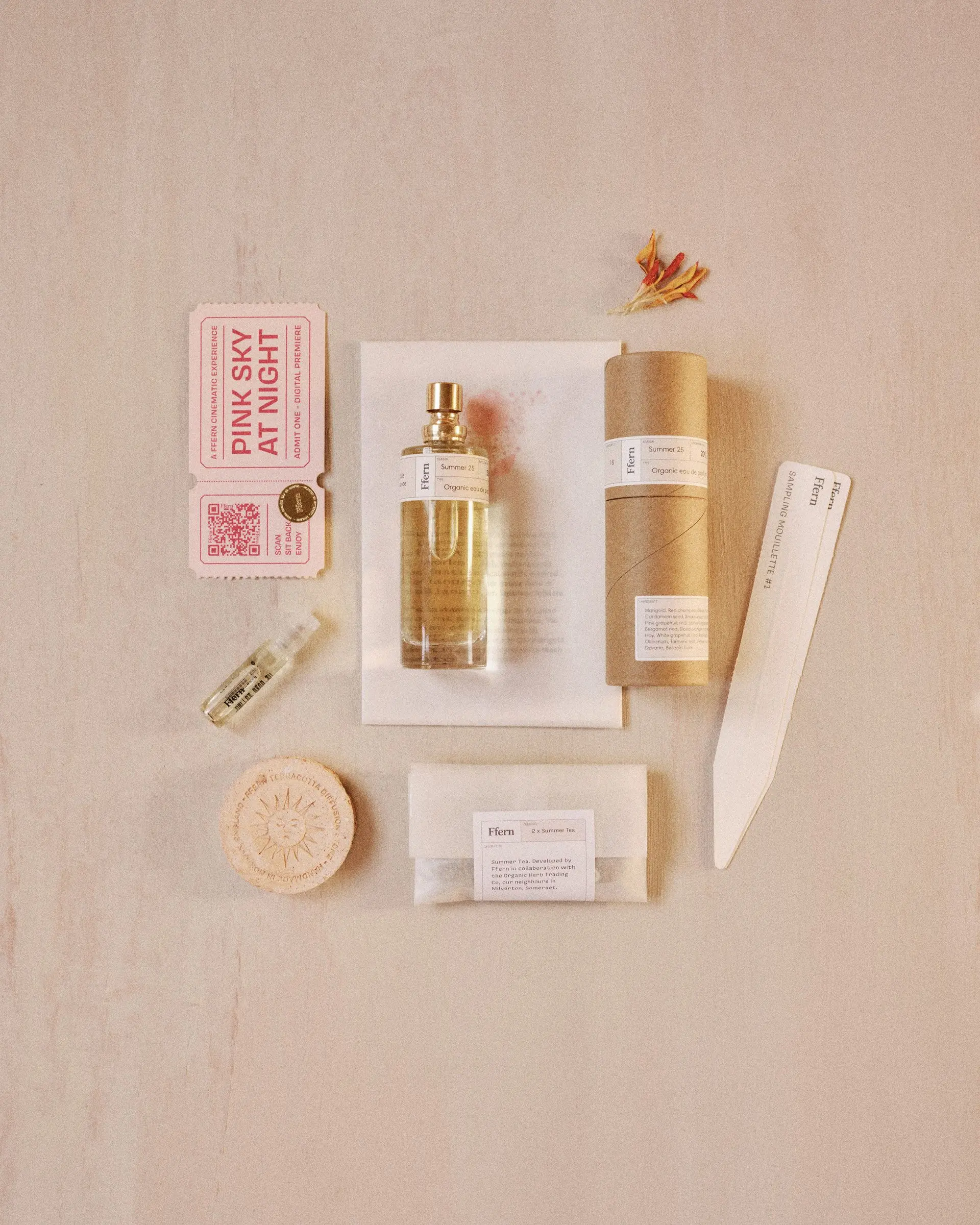
Ffern’s visual world is not loud. That is exactly why it is demanding.
Minimal packaging does not hide production mistakes. It exposes them. A slightly crooked label, weak paper stock, loose cap fit, cloudy glass, poor print density, or carton scuff becomes obvious because there is nowhere for the eye to go.
This is the trap behind “simple” perfume packaging. Simple does not mean easy. In production, simple often means less forgiving.
A restrained bottle-and-box direction needs tight control over proportion and finish. Label size must suit the bottle curve. Adhesive needs to avoid edge lifting. Cap finish should match the intended price point. Carton paper should feel deliberate, not default. If the brand uses soft natural tones, cross-material color matching between label, box, insert, and digital assets becomes more important.
The practical takeaway is useful for brands with limited budgets. You do not always need a custom mold to feel considered. A well-chosen stock bottle, a better cap, precise label alignment, controlled coating, and a carefully built box can outperform a poorly executed bespoke concept.
For brands that do need a more ownable silhouette, bespoke perfume packaging should still pass the same reality check: can the design be sampled, filled, assembled, packed, and shipped consistently?
The HIVEDA Takeaway: Build the System Before the Scent Launch
The point is not to copy Ffern. A ledger model, seasonal exclusivity, and strict scarcity will not fit every perfume brand. Some brands need retail availability. Some need wholesale continuity. Some need a broader hero collection before experimenting with limited drops.
The stronger lesson is this: build the product system before the launch story goes public.
That means deciding how the perfume will be sampled, how the bottle will be selected or developed, how decoration will hold up across production, how the carton protects the product, how the unboxing feels, and how the release calendar connects to filling and assembly. A beautiful concept is not enough. It has to become a manufacturable object.
HIVEDA can help translate this kind of product direction into a practical development path. For a faster route, that may involve ready design bottle selection, cap matching, decoration, packaging structure, sample coordination, filling, assembly, and export support. For a more distinctive route, it may involve bespoke bottle direction, 3D development discussion, mold planning, decoration testing, and packaging development.
For fragrance brands planning seasonal drops, discovery sets, or tightly edited perfume collections, the smartest move is to connect creative direction with production reality early. Explore HIVEDA’s fragrance product development services, review practical inspiration in the brand stories, or contact HIVEDA to discuss how a perfume idea can become a sample-ready, production-ready product.