
Five candle SKUs do not automatically require five different vessels. What matters is deciding which differences belong at SKU level and which parts of the product can stay shared.
That was the structure behind this Ready Design scented candle project. The collection used one plain white ceramic cup as the common vessel across five SKUs, while color, ceramic decals, fragrance identity and packaging created the visible differences between them.
The client wanted to use one cup shape across the range, avoid developing a new ceramic mold, control MOQ, move the collection toward launch quickly and make the five fragrances easy to distinguish. HIVEDA’s scope extended from branding and ceramic decoration through packaging, filling, assembly and shipment.
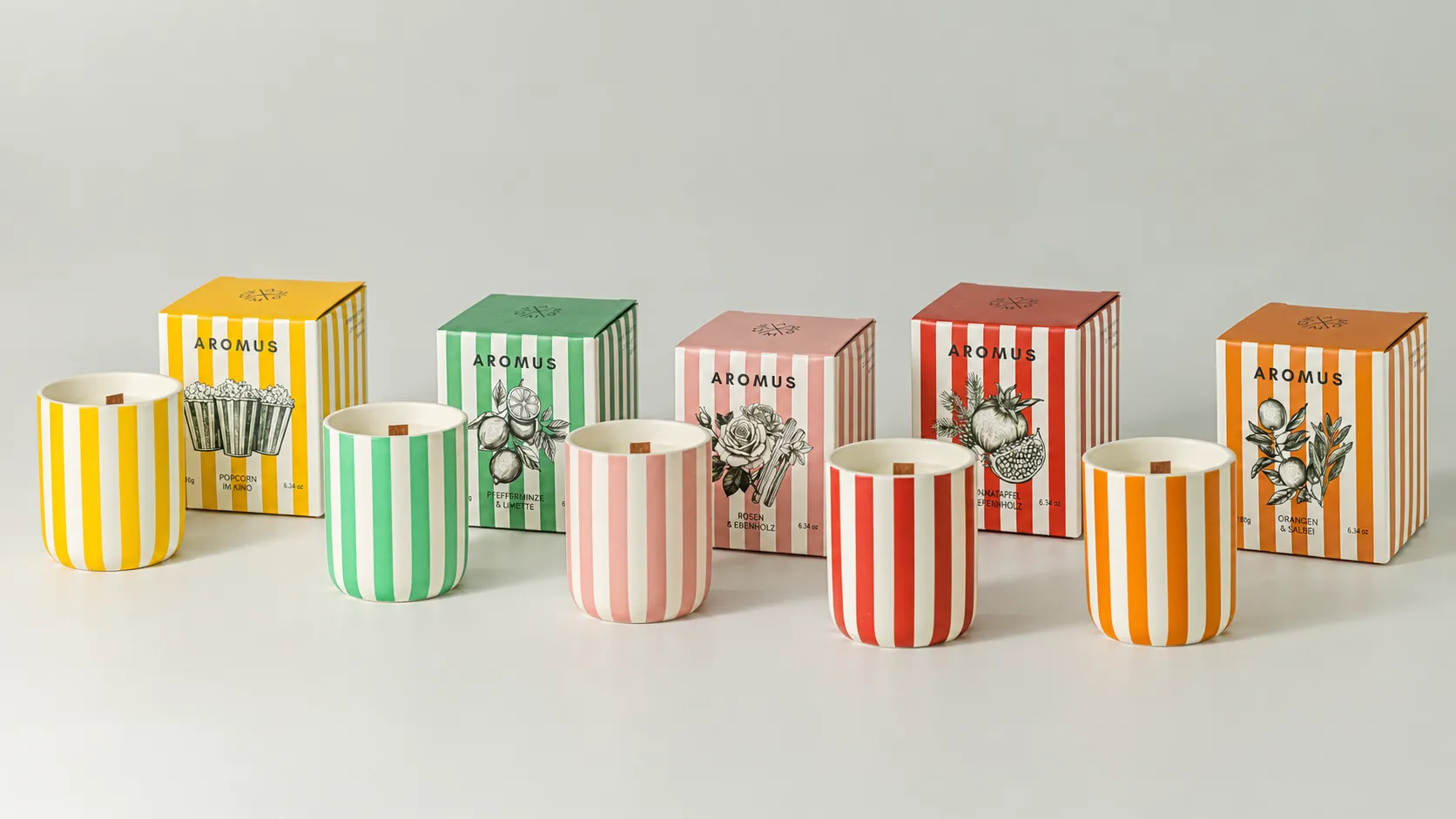
Five SKUs, One Ceramic Shape
From the buyer’s side, this is a five-product collection. From the development side, it does not need to become five completely separate structural projects.
All five SKUs use the same ceramic cup shape. The vessel proportions, opening and overall silhouette remain common across the range, while the visible design changes from yellow to green, pink, red and orange.
That distinction is important in a multi-SKU candle program. Changing the scent is one decision. Changing the artwork is another. Changing the packaging is another. Developing a different ceramic structure for every SKU would add yet another layer.
In this project, the vessel structure stayed shared while the brand-facing elements carried the variation.
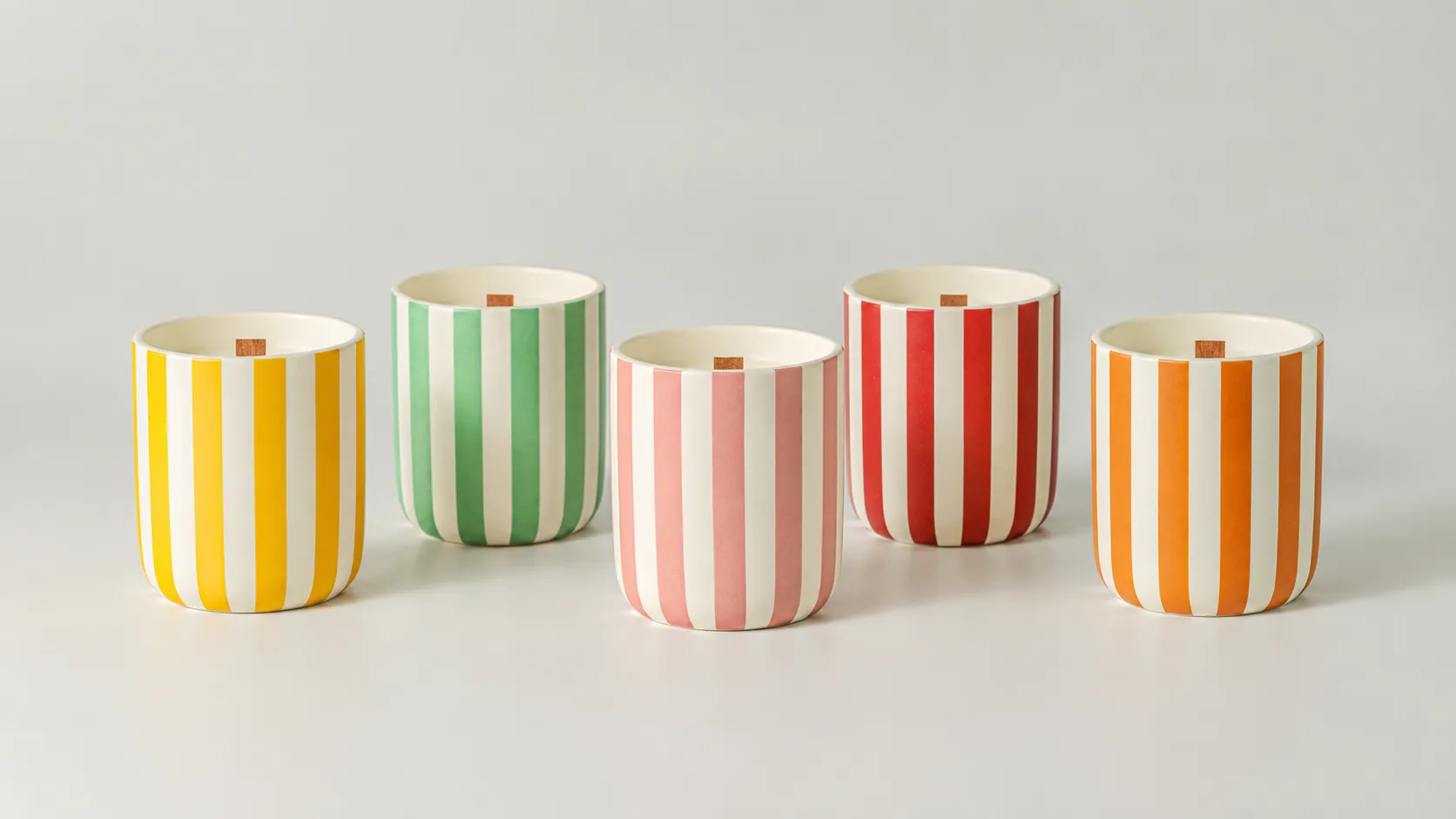
The White Ceramic Cup Was the Platform, Not the Finished Design
The starting vessel was a plain white ceramic cup. That is what makes this a useful example of Ready Design candle development: an existing vessel structure provided the physical base, but it was not the finished brand expression.
This matters for brands that assume an existing vessel will automatically make the finished product look generic. The cup shape and the brand identity are two separate decisions.
The project combined a Ready Design route with the client’s objectives of avoiding a new ceramic mold, controlling MOQ and launching the collection efficiently. The visual work then happened on top of that shared base through ceramic decals and coordinated packaging.
A bespoke ceramic mold can make sense when the vessel shape itself needs to become proprietary. But when the main objective is to create several differentiated SKUs around one reliable structure, surface decoration can carry much more of the identity.
The SKU Difference Moved Onto the Ceramic Surface
The defining customization on the vessel was the ceramic decal.
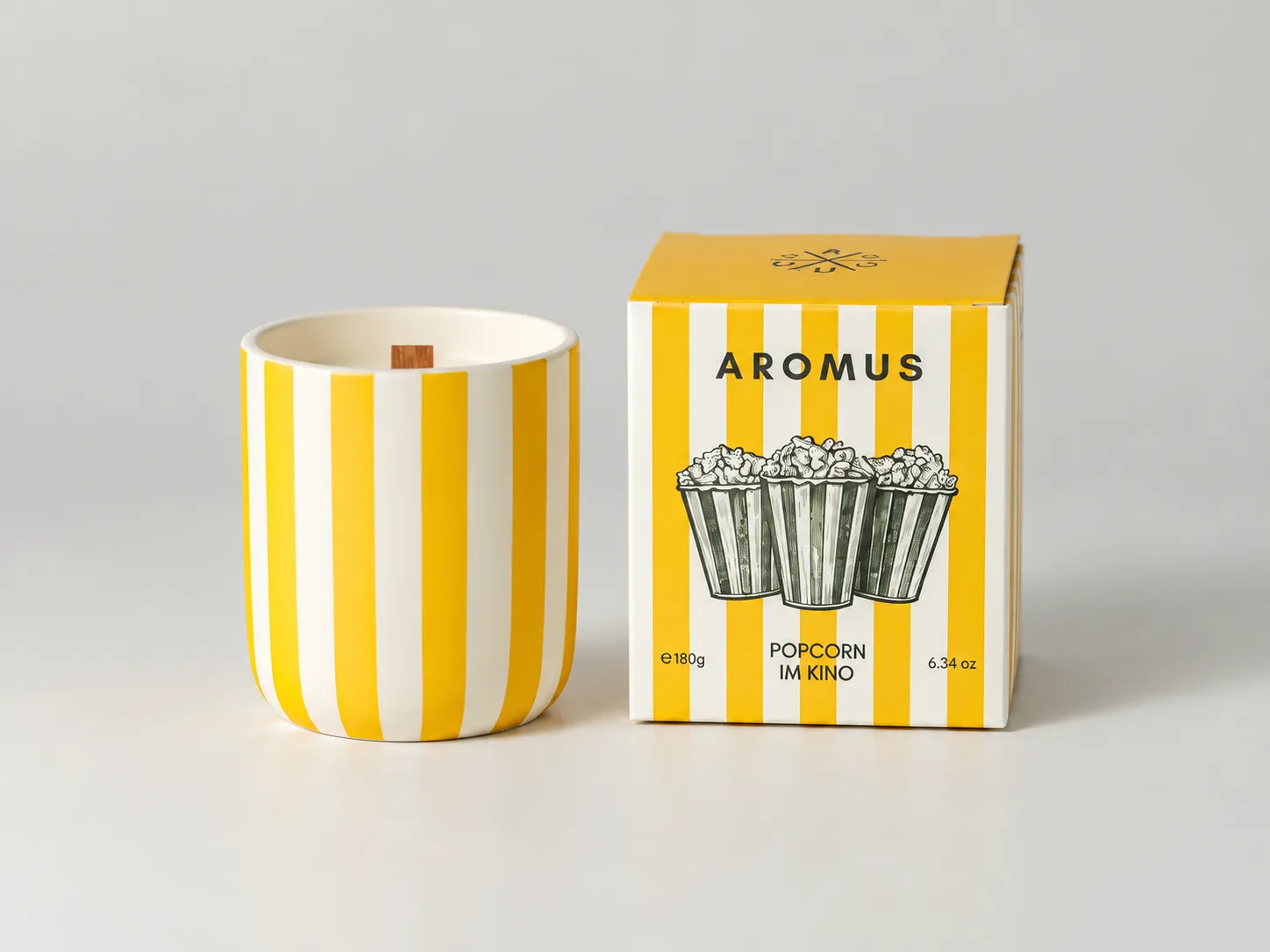
HIVEDA handled the decal artwork, decal production, application and firing. The resulting vertical stripe system turns the plain white cup into five visually distinct versions without changing the ceramic shape.
Yellow, green, pink, red and orange become the primary SKU codes. The stripe pattern stays consistent, so the products still read as one collection even when the individual color directions are clearly different.
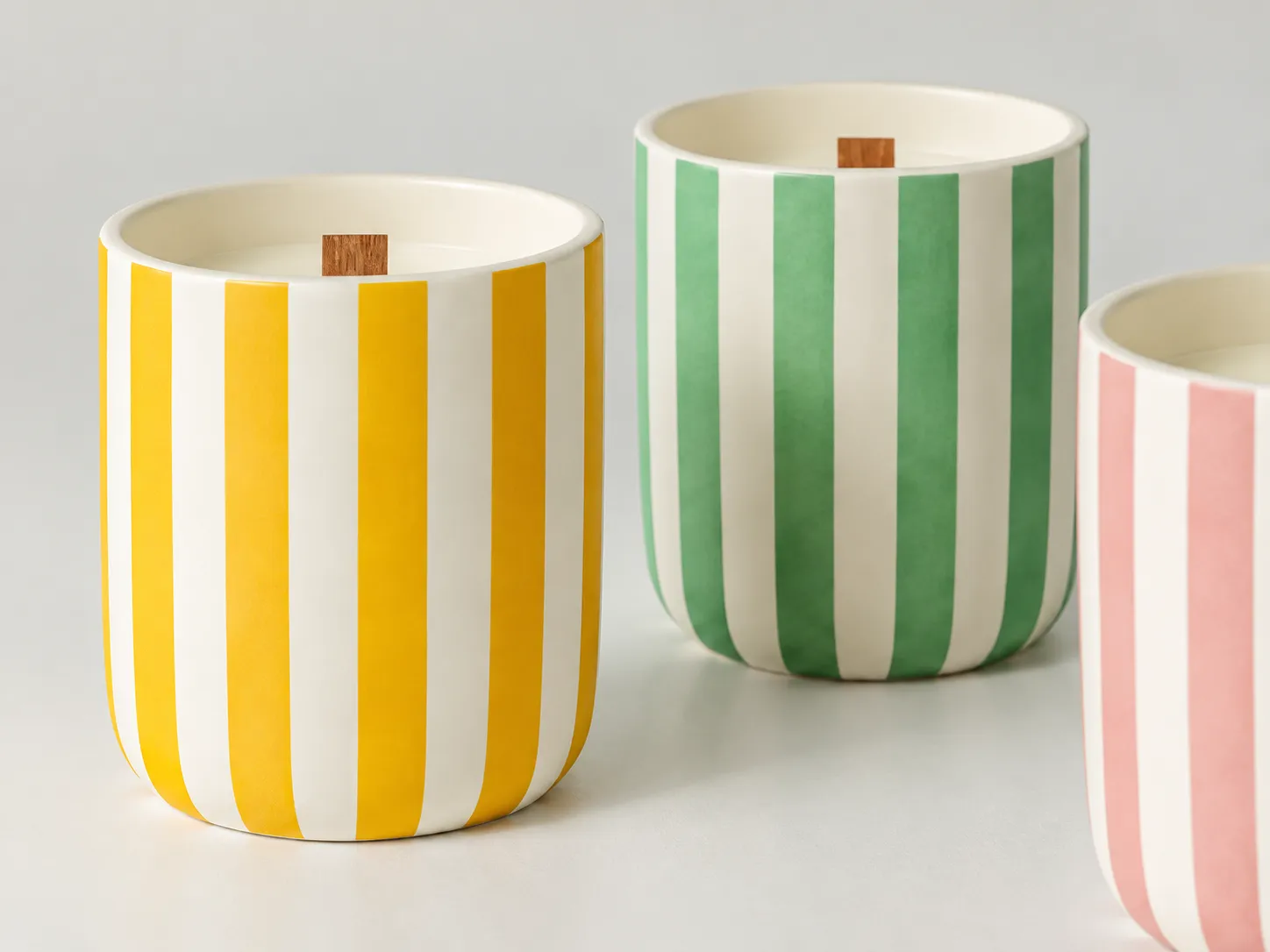
This is a practical distinction for candle development. The collection does not need five molds to produce five recognizable products. The variation can sit in the ceramic surface treatment instead.
It also means the decoration itself becomes a production item that needs to be managed correctly. Each SKU can share the vessel but still carry its own artwork and color reference.
The Box Repeated the Color System, Then Added More Identity
The packaging continues the same color logic instead of introducing a second visual system.
Each carton repeats the vertical stripes used on its corresponding candle. The yellow candle connects to the yellow carton, the green candle to the green carton, and the same logic continues across the remaining SKUs.
The boxes then add another layer of differentiation through the AROMUS wordmark, fragrance naming and individual black-and-white illustrations. The vessel carries the core color system; the carton has more space to communicate the specific fragrance identity.
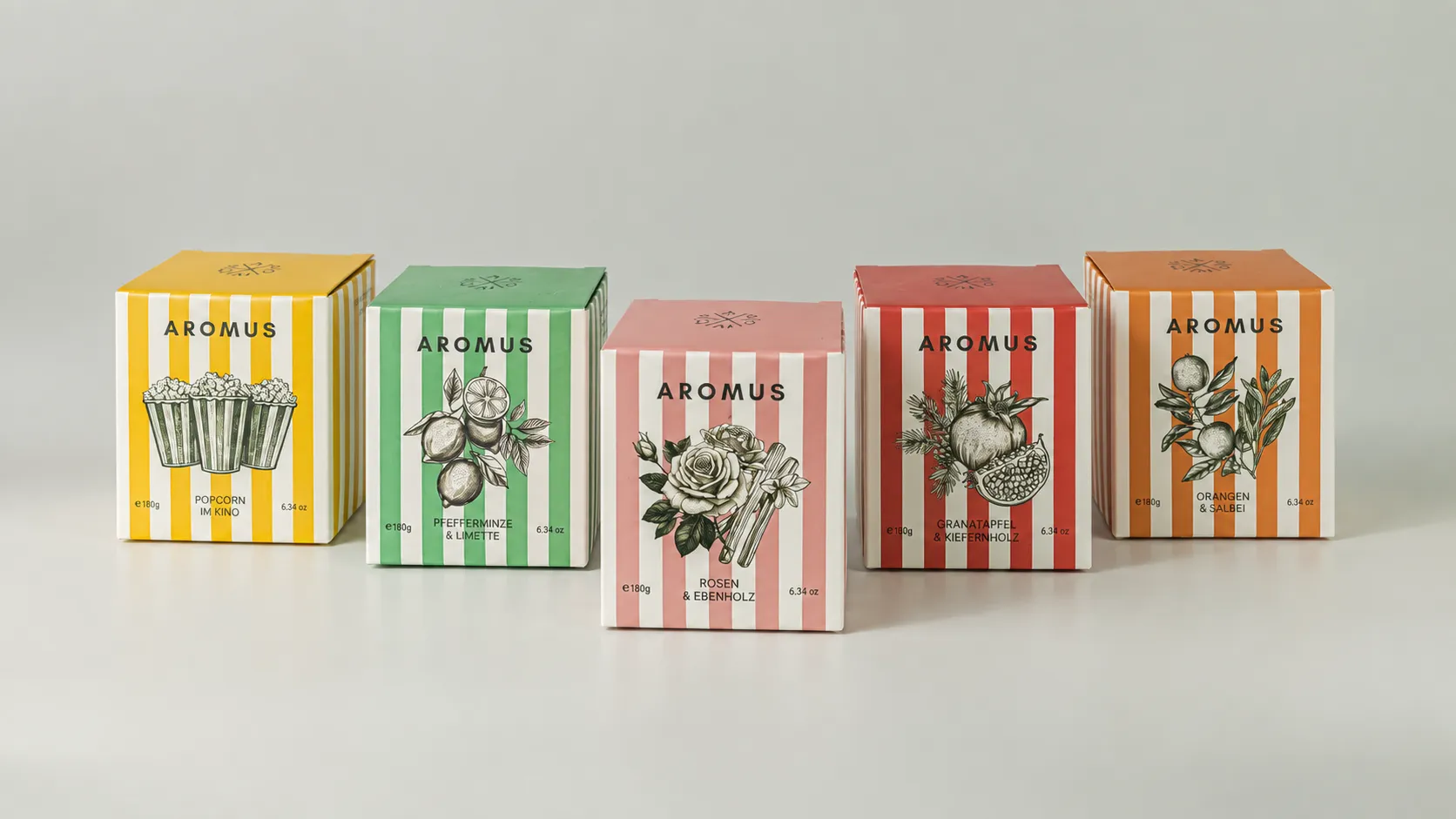
This is where a multi-SKU design system becomes more useful than simply making five unrelated products. Repetition creates the family resemblance. Controlled changes tell the customer which product is which.
One Shared Vessel Still Creates Five Production SKUs
Sharing a vessel does not make the five SKUs identical from a production perspective.
The ceramic structure is common, but other references still change. Each fragrance has its own identity. The ceramic decal artwork changes by color. The box artwork changes. Filling references and finished-product identification also need to remain separated correctly.
That is the part of multi-SKU planning that can be missed when a buyer looks only at the total quantity.
A supplier may be able to combine some components across the project while other components remain subject to their own minimums. The blank ceramic vessel, ceramic decals, packaging and finished fragrance SKUs do not necessarily follow the same MOQ logic.
This project is a good example of why shared structure and shared MOQ are not the same thing. The structure can be common even when several SKU-specific items still need separate production control.
Candle MOQ per SKU Is Really a Component Question
When buyers ask about candle MOQ per SKU, the useful answer is rarely just one number.
A better discussion starts by separating the components:
- Is there one minimum for the blank ceramic vessel?
- Does each ceramic decal artwork have its own production minimum?
- Is packaging ordered per artwork version or across the complete collection?
- Does each fragrance have a separate filling minimum?
- What is the minimum for each finished SKU after filling and assembly?
Those questions tell a buyer much more than asking for a single “candle MOQ.”
In this project, five SKUs shared one ceramic cup structure while the decoration, fragrance identity and packaging changed across the range. The client also wanted to control MOQ and avoid opening a new ceramic mold.
The practical lesson is not that every five-SKU project should use the same solution. It is that MOQ planning works better when the buyer first decides which components genuinely need to vary.
The Design Had to Survive the Move Into Production
The project did not stop at artwork.
HIVEDA’s confirmed scope covered brand and visual design, ceramic decal design, decal production and application, firing, outer-box design, packaging production, fragrance and wax configuration, filling, wood-wick installation, assembly, packing and shipment.
That full chain matters because a multi-SKU design only works commercially when the individual references stay coordinated through production.
The vessel color needs to match the intended SKU. The correct box needs to meet the correct candle. Fragrance identity needs to stay aligned with decoration and packaging. Those are production-control questions, not just graphic-design questions.
HIVEDA’s broader fragrance product development services cover this connection between design, decoration, filling, assembly and finished-product coordination.
For brands planning several candle scents at once, the useful decision is to separate what should stay common from what truly needs to change. In this collection, one white ceramic vessel became the common platform, while ceramic decals, fragrance identities and packaging turned it into five distinct SKUs.
Brands developing a similar multi-SKU collection can discuss the product structure with HIVEDA before committing every fragrance to a separate vessel or tooling path.