
Penhaligon’s perfume is useful to study because it proves one thing many fragrance brands forget: heritage does not have to behave politely.
A brand can be old, British, formal, and still strange. It can sell tradition without becoming sleepy. It can turn perfume into character, theatre, gift object, shelf signal, and retail conversation.
That is the real lesson. Penhaligon’s perfume is not just selling fragrance liquid. It is selling a highly legible world. For perfume brands, packaging buyers, and product development teams, that world is more useful than another vague mood board titled “luxury minimalism.”
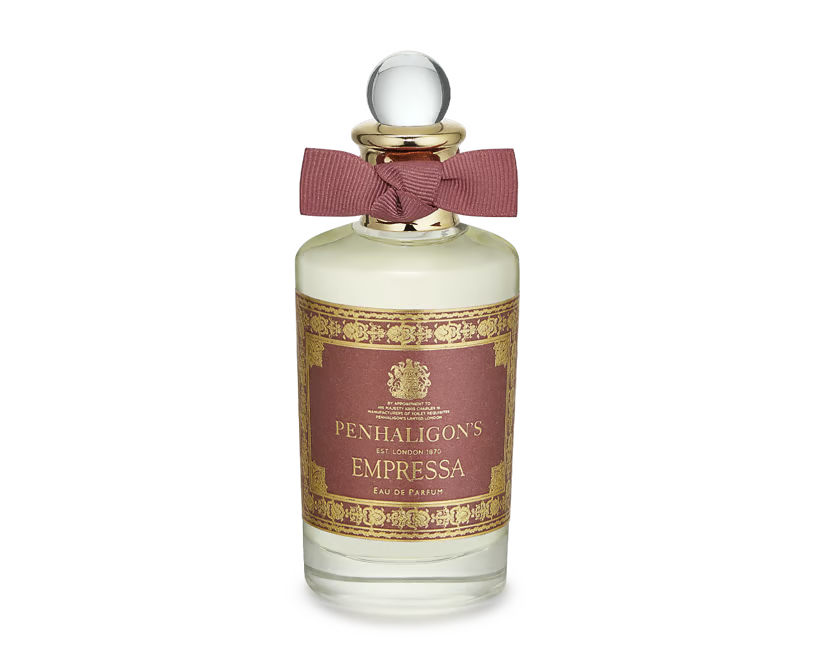
Heritage Only Works When It Still Has Teeth
Many fragrance brands treat heritage like a museum label. They show an old date, use serif typography, choose cream paper, and expect the customer to feel prestige.
Penhaligon’s perfume takes a sharper route. Its Britishness is not just historical; it is theatrical. The brand uses wit, eccentric naming, aristocratic tension, travel references, and storytelling to keep the old-world feeling alive. The result feels less like a dusty archive and more like a staged drawing room where something slightly scandalous might happen.
That matters commercially. In a crowded perfume market, “heritage” by itself is not enough. Buyers have seen amber bottles, wax seals, gold foil, and Victorian typography before. What separates a memorable fragrance brand is the ability to give heritage a point of view.
For a new perfume brand, the takeaway is simple: do not borrow historic codes unless you know what they are doing for the product. A ribbed glass bottle, a heavy cap, or an ornate carton should not be decoration for decoration’s sake. It should tell the customer how to read the scent before they spray it.
The Bottle Does Not Whisper. It Performs.
Penhaligon’s understands that the bottle is part of the performance. Some fragrance brands want their packaging to disappear so the juice can “speak.” That can work for minimalist brands. It is not the Penhaligon’s approach.
The brand often uses packaging as a stage cue. A distinctive cap, a portrait-style identity, a dramatic label, or a decorative box can make the fragrance feel like a character before the customer smells it. This is especially important for online browsing, gifting, and retail shelf display, where the first impression is visual, not olfactive.
For brand owners, this raises a practical question: what is your bottle doing in the first three seconds?
Is it communicating price level? Is it making the fragrance easier to remember? Does the cap shape support the story? Does the box look giftable enough to reduce the need for extra wrapping? Does the design still work when placed beside three other SKUs in the same collection?
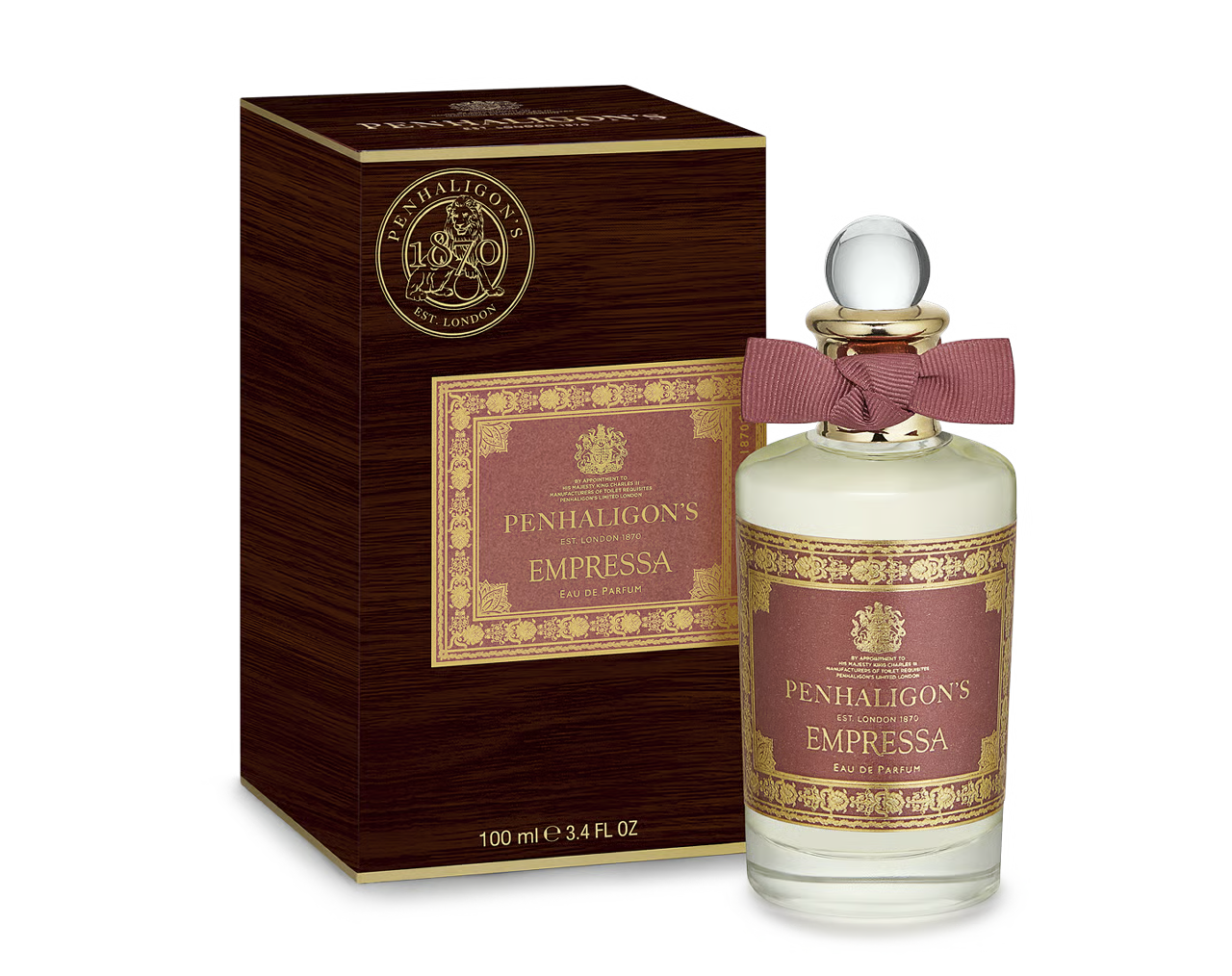
This is where fragrance packaging becomes a development decision, not just a branding decision. A dramatic cap may need weight testing, fitting checks, and tolerance control. A deep color coating may need compatibility testing across samples. A decorative carton may look beautiful in rendering but scuff during assembly or export.
The best brands make drama look effortless. Behind the scenes, it is rarely effortless.
Collections Need a World, Not Just a Note List
One reason Penhaligon’s perfume feels bigger than a group of individual perfumes is collection logic. The fragrances sit inside worlds: characters, journeys, British tales, rituals, and eccentric narratives.
This is a useful lesson for brands building their first serious range. Too many collections are built only around fragrance families: floral, woody, citrus, amber, musk. That structure is clear, but it is not always memorable. It helps internal organization more than customer desire.
A stronger collection gives the buyer a reason to compare, collect, gift, and return. The difference between two SKUs should feel intentional, not accidental. One scent might be the quiet one, another the dramatic one, another the travel-led one, another the evening signature. The packaging system should help the customer understand that relationship.
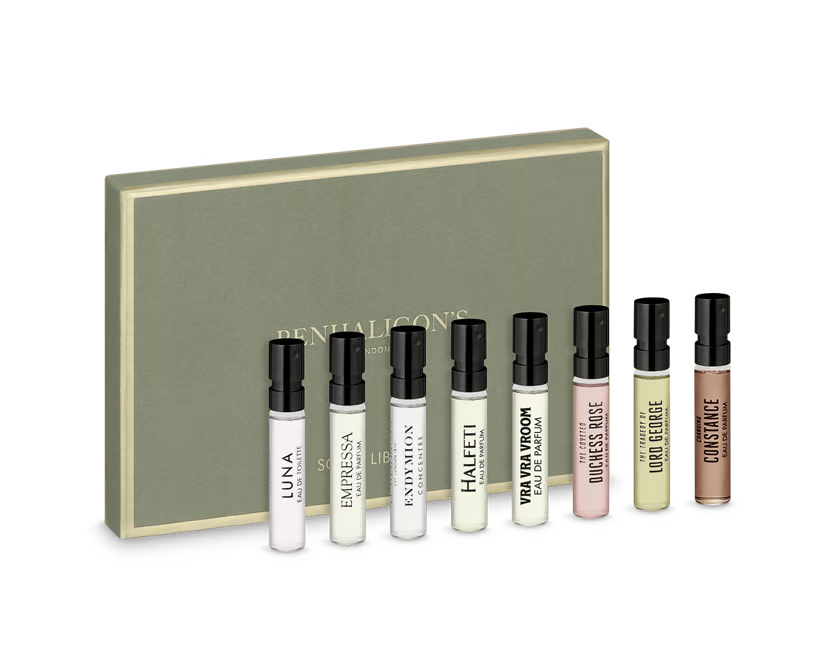
For product teams, a disciplined collection might start with three to five SKUs rather than ten. Keep the bottle family coherent. Use controlled variation through color, label tone, cap detail, carton artwork, or naming. Then add discovery sets or travel sprays so customers can enter the world at a lower commitment level.
This is especially relevant for niche fragrance brands. When the scent story is complex, sampling is not optional. Discovery sets, testers, and travel formats help translate curiosity into trial. They also require planning: vial selection, filling volume, label scale, outer box structure, and batch consistency.
The Production Lesson: Drama Needs Discipline
The more expressive the product idea, the more disciplined the development process must be.
That is the quiet production lesson behind a brand like Penhaligon’s perfume. Eccentric packaging may look playful to the customer, but it creates real manufacturing questions. Can the cap be repeated consistently? Will the decoration align across production batches? Can the carton protect the bottle in transit? Does the label curve cleanly around the glass? Can the filling and assembly process handle the chosen components without slowing everything down?
For fragrance brands, this is where beautiful concepts often break. A custom cap is approved too early. A box is designed before the bottle dimensions are locked. A coating looks right in one sample but shifts under different lighting. A discovery set is added late and suddenly needs its own miniature packaging system.
Good product development does not kill creativity. It protects it.
Before launch promises are made, brands should pressure-test the product direction through sampling. That means checking glass weight, cap fit, pump compatibility, spray performance, decoration durability, carton structure, insert design, and assembly flow. For export-ready production, packaging must also survive handling, packing, and shipping realities.
This is not the glamorous part of fragrance branding, but it is where the customer experience is either protected or damaged.
How Fragrance Brands Can Apply the Penhaligon’s Lesson
The Penhaligon’s lesson is not to copy British heritage codes. It is to build a product world with enough character to be remembered and enough discipline to be produced.
For some brands, that may mean using a ready design perfume bottle and investing more energy into color coating, label design, cap selection, and a stronger gift box. For others, it may mean developing a bespoke perfume bottle design with a more ownable silhouette or custom cap direction.
The same thinking can extend beyond perfume. A home fragrance brand may apply collection storytelling to scented candles, using vessel color, wax tone, lid detail, and carton structure to create a more giftable range. A diffuser brand may use the same logic for reed diffusers, where bottle shape, reeds, collar, and outer packaging all affect the perceived value.
HIVEDA can help translate this kind of product direction into a practical development path, from ready design perfume bottle selection or bespoke structure to decoration, packaging, sampling, filling, assembly, and export coordination. The point is not to make every brand theatrical. The point is to make the product idea visible, manufacturable, and coherent from first sample to finished shipment.
Penhaligon’s perfume shows that fragrance packaging can carry wit, memory, status, and story. For emerging fragrance brands, that is the challenge: do not simply make a nice bottle. Build a product people know how to talk about.
Because in fragrance, being remembered is often the first sale.