
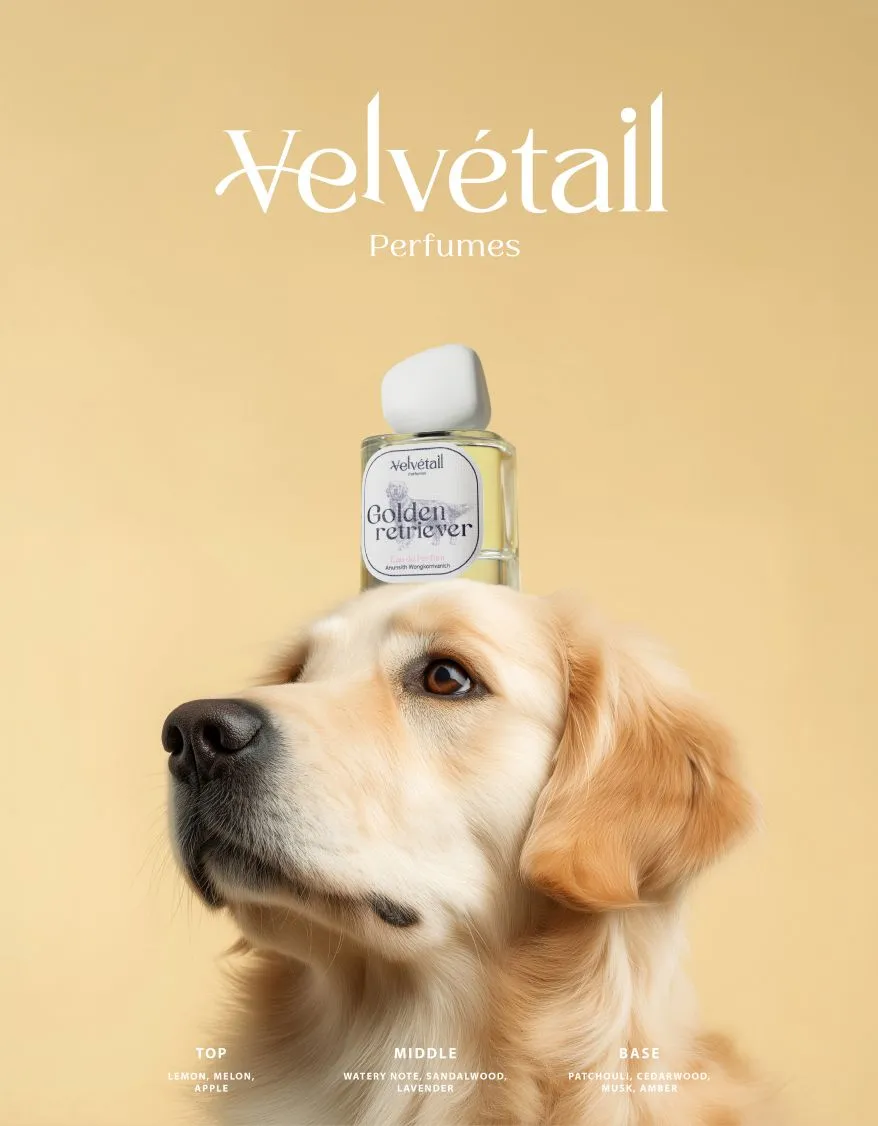
A Golden Retriever, Greyhound or Persian cat is normally the subject of a campaign image, not the primary navigation system for a perfume collection. Velvétail Perfumes reverses that relationship. The young Thai fragrance brand names each perfume after a recognizable pet breed and builds the scent, front label and campaign world around the personality associated with that animal.
The packaging is interesting precisely because the physical bottle does not try to compete with the idea. Across current product imagery, a compact transparent bottle, rounded white upper element and large illustrated front panel repeat from one fragrance to another. What changes most visibly is the breed: its name, drawing and surrounding colour world. Velvétail therefore behaves less like eight separately styled perfumes and more like one expandable framework for eight characters.
That system has already revealed a second, less playful issue. If animals become the most memorable part of a human fragrance brand, packaging also has to make the intended user unmistakable. In Velvétail’s case, the same pet-first communication that gives the collection immediate recognition led the brand to publicly acknowledge a possible misunderstanding and revise its packaging artwork.
Velvétail Starts With the Pet Before the Perfume
Velvétail’s starting point is not simply “perfume with animals on the label.” In launch coverage, owner and designer Tipakorn Suwannasri described the brand as an attempt to translate characteristic qualities associated with different pet breeds into fragrance: playfulness, cheerfulness, tenderness, politeness and elegance among them. The animal therefore functions as a creative brief before it becomes a graphic device.
That changes how a shopper enters the assortment. Fragrance collections often ask consumers to decode abstract names, ingredients or olfactory families before they understand the differences between SKUs. Velvétail begins with a piece of cultural shorthand that is already familiar. “Golden Retriever” suggests one temperament before the notes are read; “Greyhound” suggests another; “Persian” and “Maine Coon” carry distinct feline associations of their own.
The perfumers can then interpret rather than imitate those characters. Golden Retriever, by Anunsith Wongkornvanich, moves through fruit, watery notes, lavender, woods, musk and amber, while Greyhound, also by Wongkornvanich, uses bitter almond, black pepper, iris and a warmer base. The value of those compositions to this story is not whether they literally smell like a dog. It is that Velvétail gives each perfumer a personality framework and then lets scent, illustration and campaign styling express different parts of the same character.
Six Breeds Became a Launch Grid
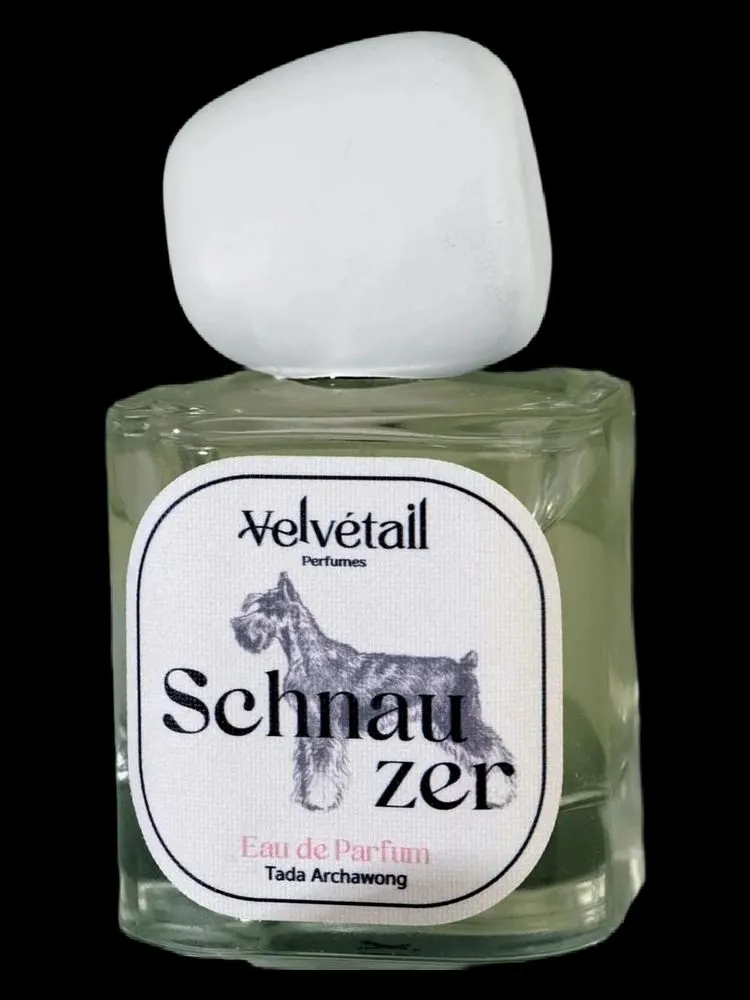
The launch assortment turned that idea into a disciplined product grid. When Velvétail reached online retail in November 2025, the collection contained four dog breeds – Golden Retriever, Greyhound, Schnauzer and Maltese – and two cats, Maine Coon and Persian. All were offered as 50 ml Eau de Parfum, while three Thai perfumers worked across the six fragrances: Anunsith Wongkornvanich, Tada Archawong and Saruj Tangtaratorn.
That balance between fixed and variable elements is commercially useful. The fragrances do not need to share one perfumer or one tightly repeated scent structure in order to look like a collection. Persian, credited to Tangtaratorn, centres rose between grapefruit, red berries, woods and musk. Maine Coon, credited to Archawong, moves through aromatic, spicy, leathery and ambered territory. Their olfactory personalities can separate because another system is maintaining family recognition.
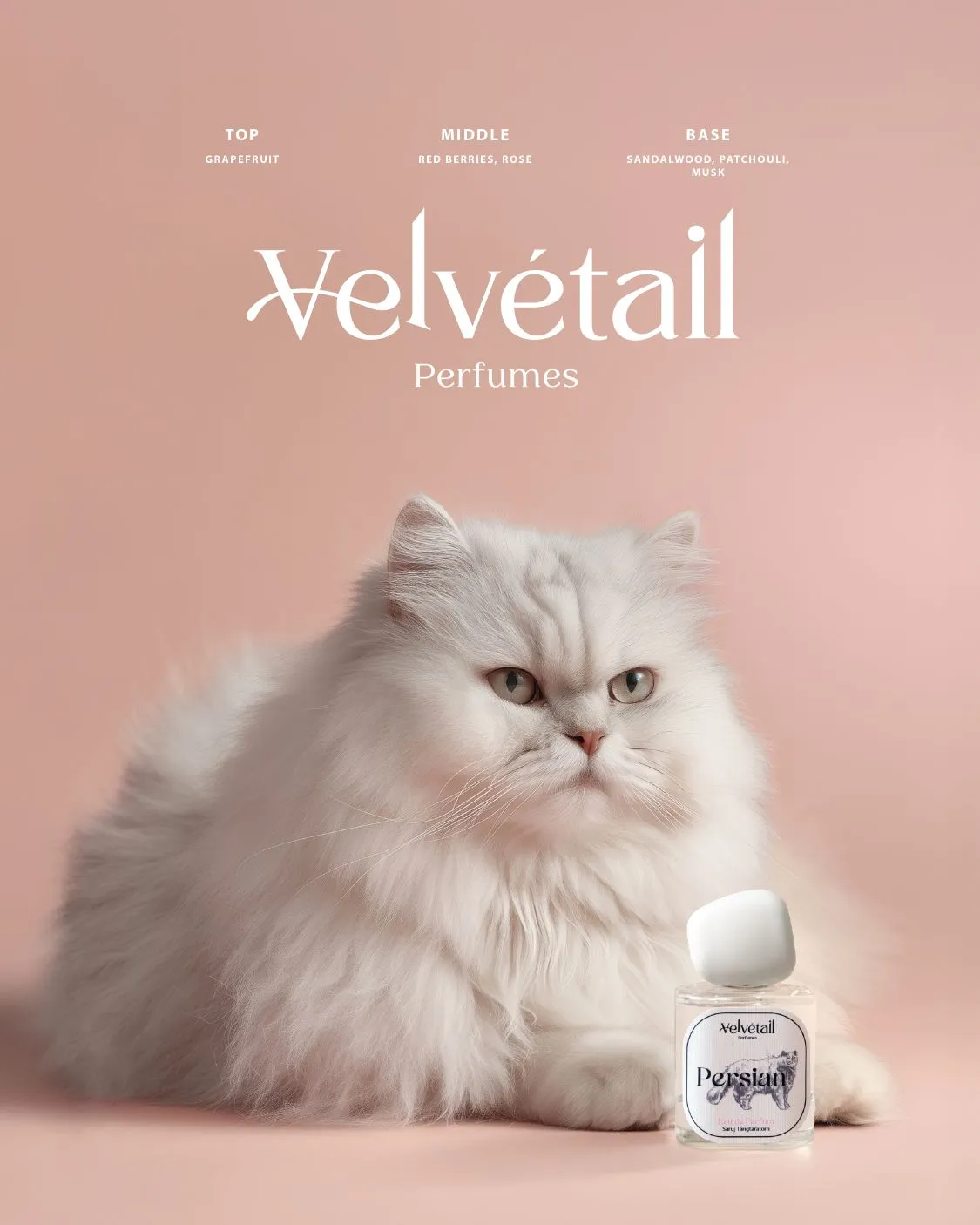
This is one reason Velvétail reads as more than a sequence of novelty names. Six products launched together, but each occupies a clearly defined slot: breed, character, perfumer, fragrance and visual world. For a young house, such a grid makes future expansion easier to understand because a new fragrance does not need a new brand architecture. It only needs to satisfy the existing rules strongly enough to feel like another member of the same family.
One Quiet Bottle Gives Every Breed a Face
Current retail imagery makes the physical logic particularly clear. The bottle uses a compact, softly rectangular transparent body with a large rounded white upper element. A pale front panel with rounded corners occupies much of the main face. Velvétail’s name remains comparatively small near the top, while the breed name becomes the dominant piece of typography and an animal illustration reinforces it visually.
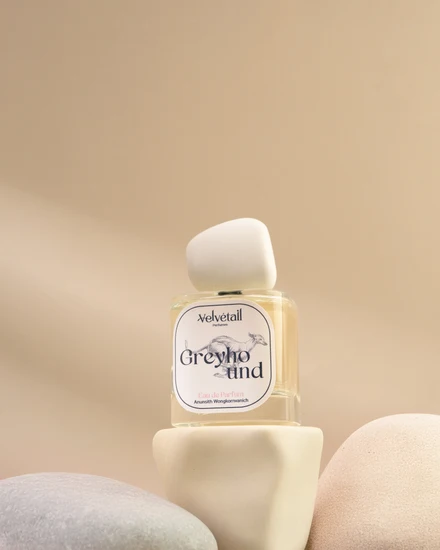
The result is a hierarchy in which the variable information becomes more noticeable because the structural information repeats. When a shopper moves from Greyhound to Maine Coon, the eye does not have to relearn the package. The same bottle proportions and label territory remain familiar, allowing the breed name and drawing to register as the meaningful change.
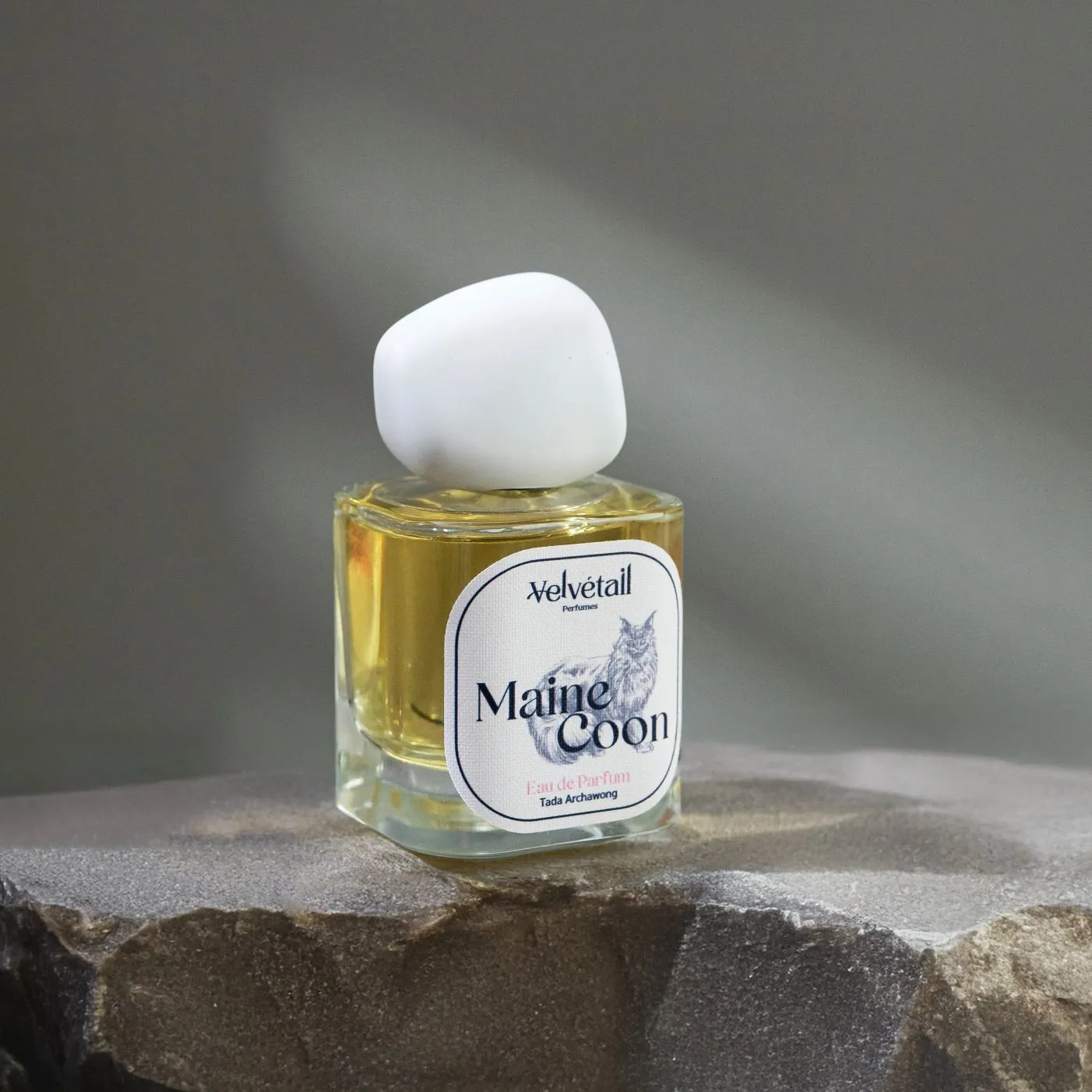
It would be a mistake to convert this visible repetition into an unsupported sourcing claim. There is no reliable evidence that Velvétail uses a stock bottle, a proprietary mould or any particular supplier. From a broader product-development perspective, however, the architecture demonstrates the commercial value of deciding which layer should carry variation. A brand does not necessarily need eight structural bottle designs to create eight distinct personalities.
For founders exploring a comparable approach, existing perfume bottle formats with customized branding are one development route for concentrating differentiation in caps, labels, finishes and secondary packaging rather than creating a new bottle structure for every SKU. That is an industry comparison only; there is no evidence that Velvétail uses HIVEDA or a ready-design sourcing model.
When the Mascot Becomes Too Convincing
The most revealing part of Velvétail’s packaging story emerged after launch. In January 2026, readers responding to a Fragrantica article questioned whether the animal-led presentation could cause someone to mistake the perfumes for products intended for pets. Velvétail’s own account responded that it had noticed the concern and was revising its packaging artwork to include a clearer statement: “do not spray on pets.”
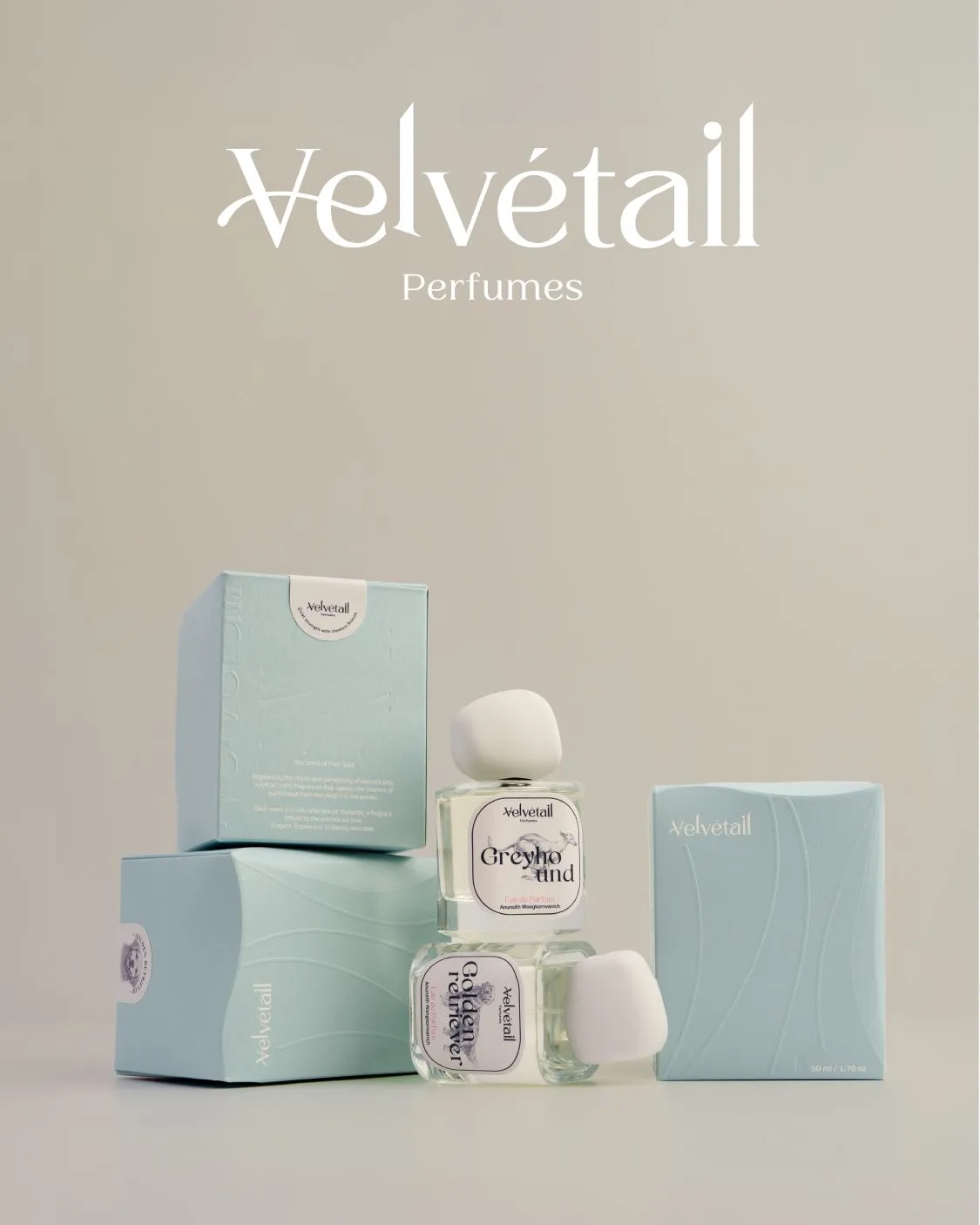
The tension is unusually specific. Velvétail’s names are memorable because they are literal breed names. The labels contain animal illustrations. Campaigns place the perfumes beside cats and dogs. Those choices make the concept understandable almost instantly, but they also increase the importance of information that distinguishes “inspired by this pet” from “made for this pet.”
Current ZGO listings now describe Velvétail fragrances as created for human wear and not intended for animals. That supports the broader communication point, but it does not prove the exact position, typography or format of the warning on every current production bottle or carton. Without a clear photograph of revised finished packaging, the safer conclusion is that the brand acknowledged the issue and that current retail communication states the intended use explicitly.
There is also a practical B2B consequence. Once packaging wording changes after launch, the job is no longer only graphic design. Revised artwork needs to move accurately through approved files, labels or cartons, assembly and inspection. For teams handling this kind of revision, packaging development and quality-control coordination can become as important as the initial creative idea because consistency determines whether the clarification reaches the finished product. This is again a general manufacturing parallel, not a claim about Velvétail’s suppliers.
Welsh Corgi and Sphynx Prove the System Can Keep Growing
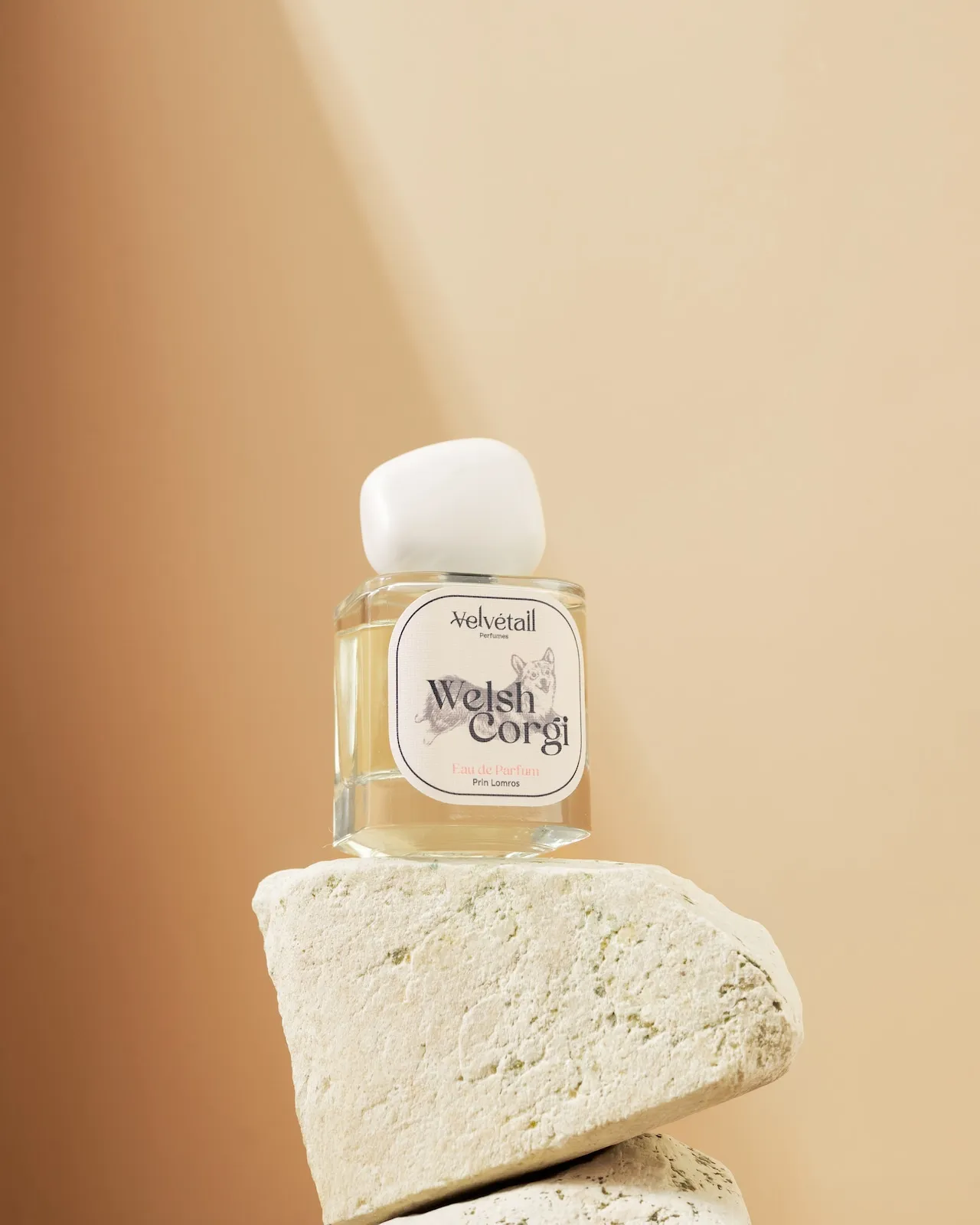
Suwannasri said at launch that more breeds were planned. The current range provides the first evidence that the framework can actually absorb them. SKONX now lists eight Velvétail products rather than the original six, with Welsh Corgi and Sphynx extending the collection while maintaining the breed-name architecture.
Welsh Corgi is credited by ZGO to Prin Lomros. Its story centres on freshly washed, energetic puppy softness, expressed through nectarine, orange blossom, a solar accord, wild flowers, heliotrope, musk and marzipan. The important packaging observation is that a new perfumer and a new character do not require a new visual grammar. The existing frame simply receives another breed identity.
Sphynx moves in a markedly different emotional direction. SKONX frames it around exposure, confidence and warmth, with saffron and iris followed by nutmeg, leather, tonka bean, amber and vetiver. That makes it a useful contrast to the softer Persian or Maltese identities. The packaging system does not need every animal to share the same mood; it only needs the relationship between bottle, breed name and illustration to remain readable.
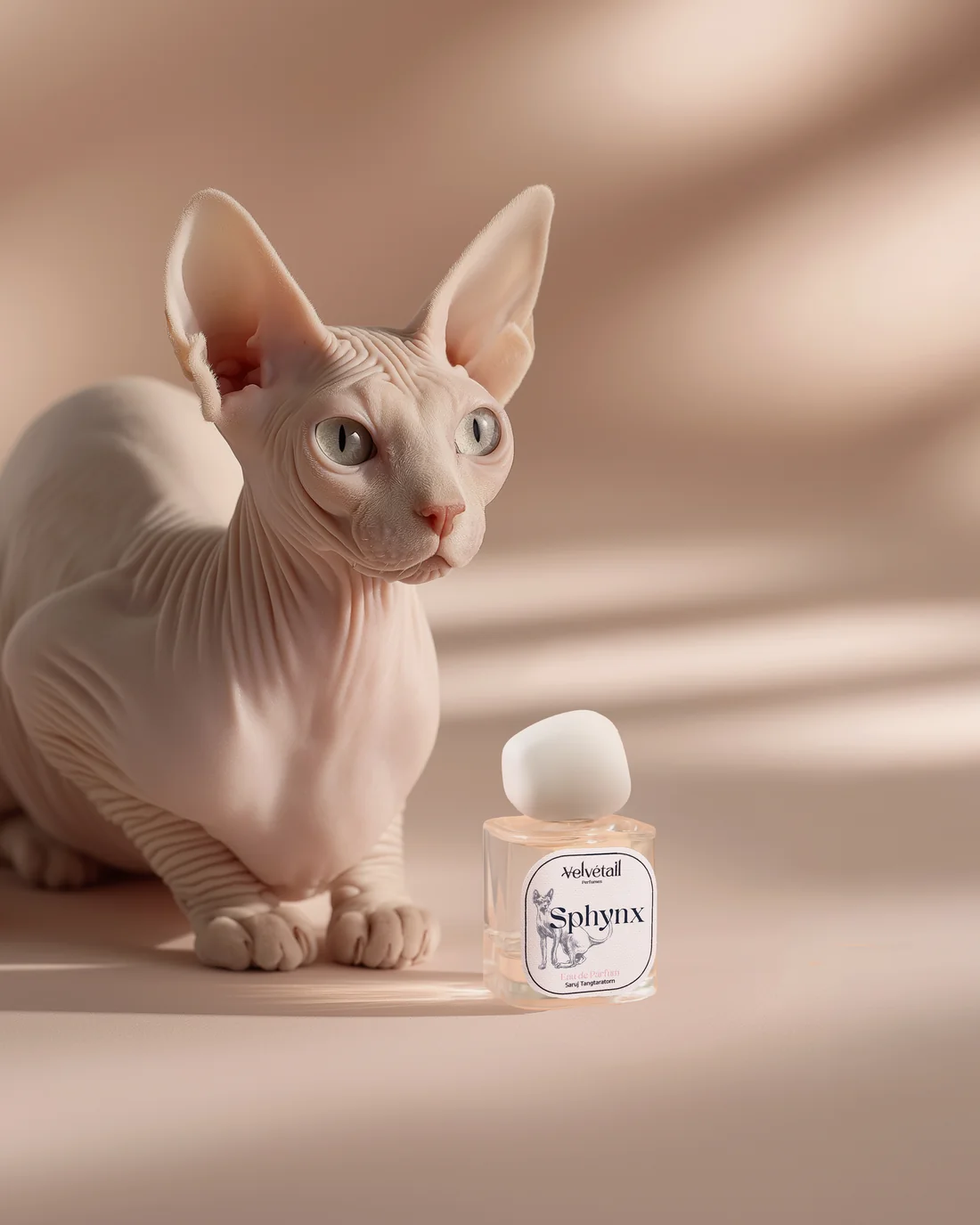
This is where the difference between a launch look and a scalable system becomes clearer. Six products conceived at one moment can appear coherent by default. Adding two more tests whether the rules are portable. Welsh Corgi and Sphynx suggest that Velvétail can expand the character spectrum without making the first six products look like an earlier design generation.
The Animal Can Change; Velvétail’s Frame Does Not Have To
Velvétail’s packaging is most useful to study as a division of responsibilities. The bottle creates continuity. The front panel creates a consistent information zone. The breed name gives each SKU its fastest identifier. Illustration turns that name into a character. Campaign colour and photography expand the personality beyond the physical pack, while different perfumers are free to translate the character into scent.
Because those roles are separated, the assortment can grow without every new fragrance demanding a structural reset. Golden Retriever and Sphynx can occupy very different emotional territory and still read as related products. A future breed can change the mood, illustration and composition while inheriting enough familiar geometry to enter the collection without explanation.
The post-launch artwork revision adds an important qualification. A strong visual system is not successful only because people recognize it quickly. They also have to recognize it correctly. In Velvétail’s case, making animals unusually central to human perfume created both the brand’s charm and an information problem worth addressing.
That tension makes the young brand more interesting than a simple pet-themed novelty. In less than a year, Velvétail has moved from six breeds to eight while keeping its product frame visually consistent, and it has publicly acknowledged that the communication carried by that frame can still be refined. The animals can keep changing. The long-term test will be whether the same quiet bottle architecture can continue absorbing new personalities while keeping both recognition and product meaning clear.