
Before Parfums MDCI was a perfume house, it was already a bottle idea. The brand’s official history of its flacons begins in 1994, when an antique collection inspired a line of high-end bottles topped with sculpted figurines. Marchal Dessins et Créations Indépendantes itself was founded in 2003.
That nine-year gap changes how the packaging should be read. At MDCI, the flacon was not simply developed to give an existing fragrance business a recognizable shell. The collectible object sits close to the origin of the business itself, and the collections that followed keep revisiting the relationship between fragrance container, sculpture and artwork.
Nine Years Before MDCI, There Was Already a Flacon
MDCI connects its first bottle concept with founder Claude Marchal’s interest in Greek and Roman antiquities. In an early interview, Marchal described beginning with the bottle and later developing the fragrance content. He also said he drew the bottles and sculpted the small busts himself.
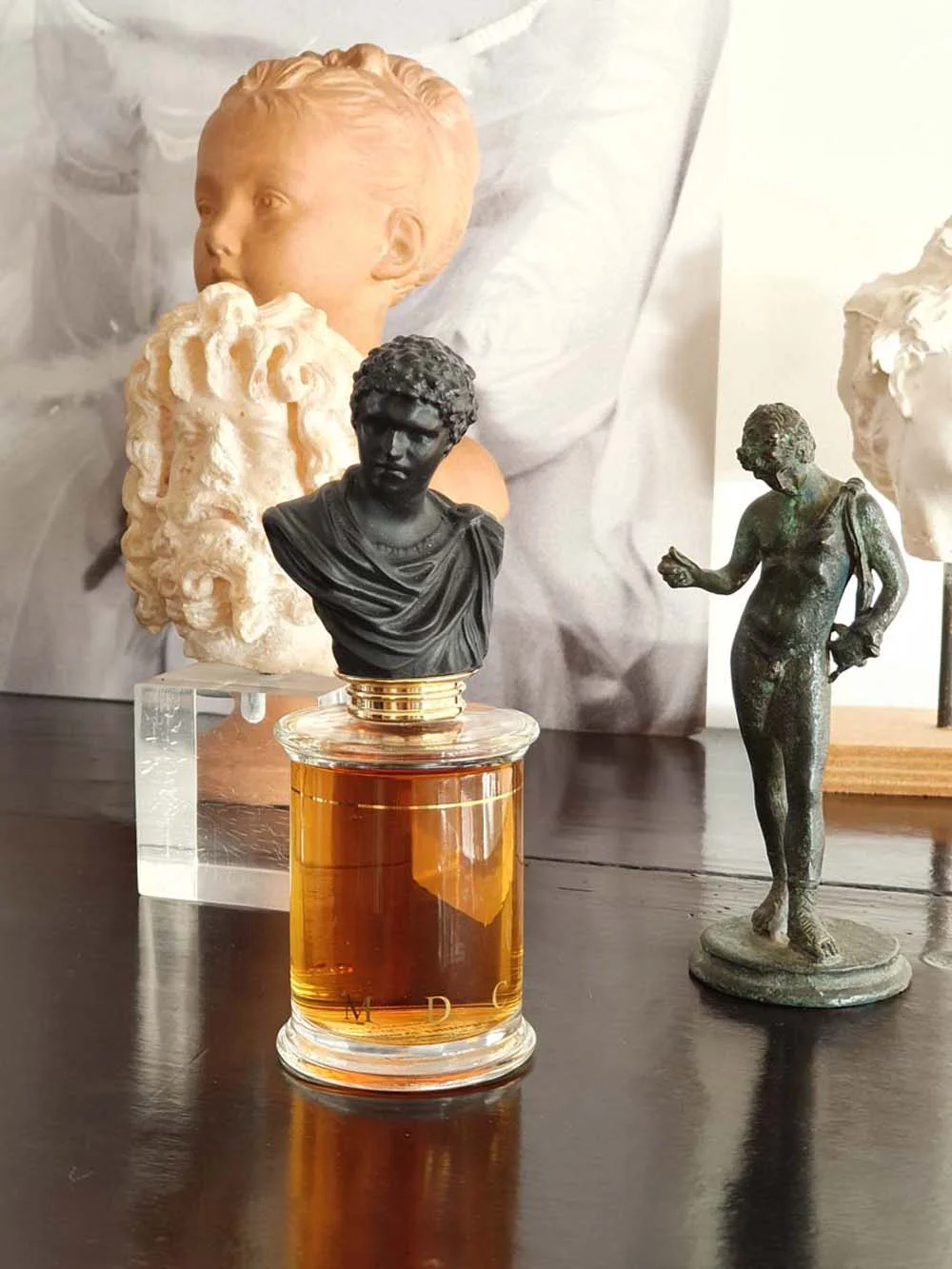
This origin is more consequential than a historical anecdote. It means the bottle concept already carried an aesthetic proposition before MDCI had accumulated the perfume catalogue that now fills it. The package was part of the premise.
The Glass Cylinder Becomes a Plinth for Sculpture
The Classic Collection makes that premise immediately visible. Below, the 75ml bottle uses a restrained cylindrical geometry with strong horizontal rings around the shoulder and base. Above it, the sculpted figurine changes the scale and character of the object.
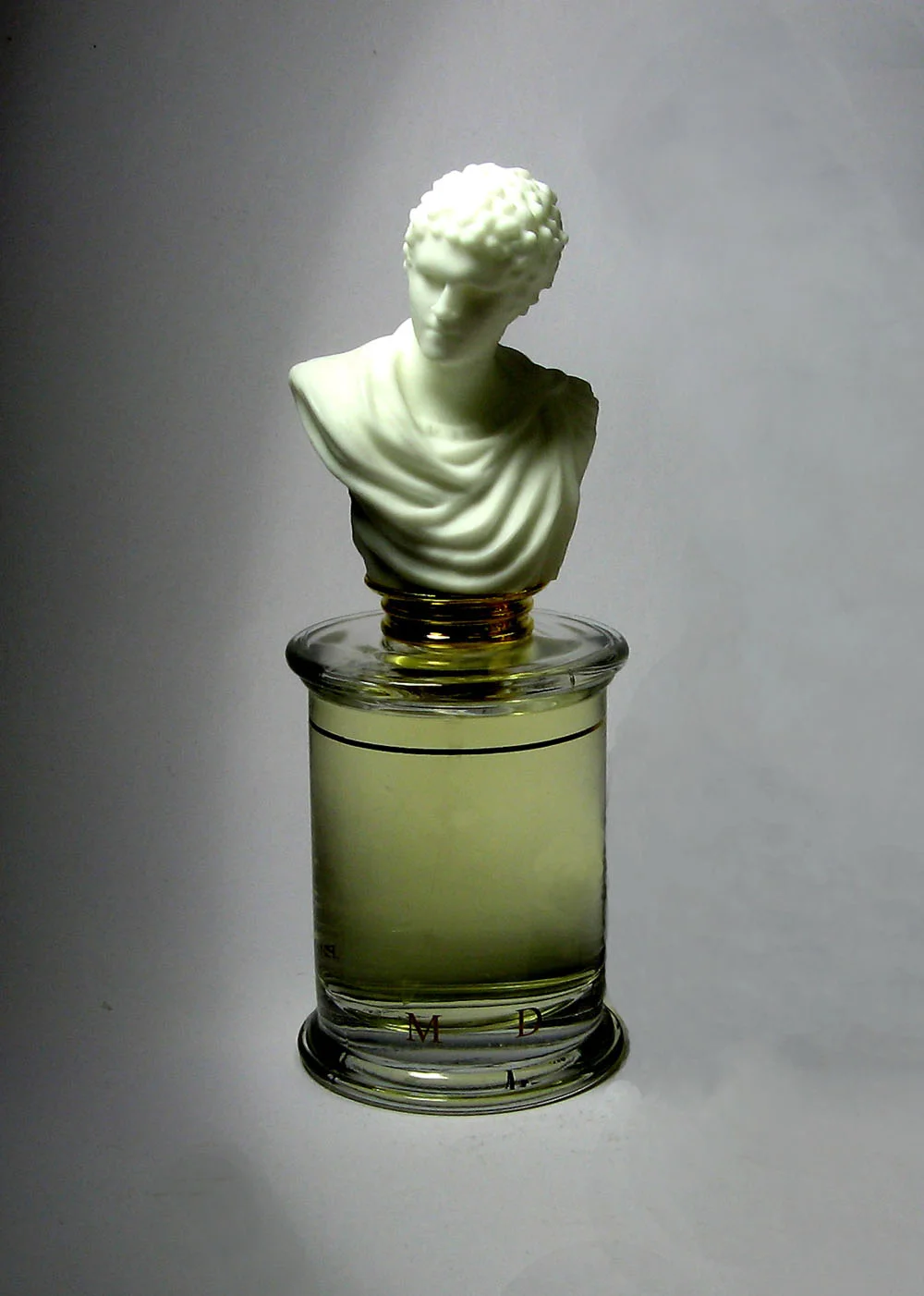
MDCI itself describes the figurines as finely sculpted stoppers. Their exact current material should not be inferred from appearance alone. What is clear visually is the division of labour: the glass remains comparatively quiet while the upper structure supplies the recognizable silhouette.
Marchal has also said that MDCI invested in its own bottle moulds rather than treating the container as interchangeable stock packaging. For B2B teams, this is the point where bespoke perfume packaging development becomes relevant. When recognition depends on proprietary geometry or a sculptural upper component, 3D development, tooling, sampling and component fit become part of the identity system, not just production details.
The Same Perfume Does Not Have to Wear the Same Bottle
The sculptural presentation is only one option. MDCI’s current catalogue also offers a simpler 75ml presentation using the same general cylindrical bottle with a handmade tassel instead of the figurine stopper. The perfume and the highest-decoration presentation are therefore not inseparable.
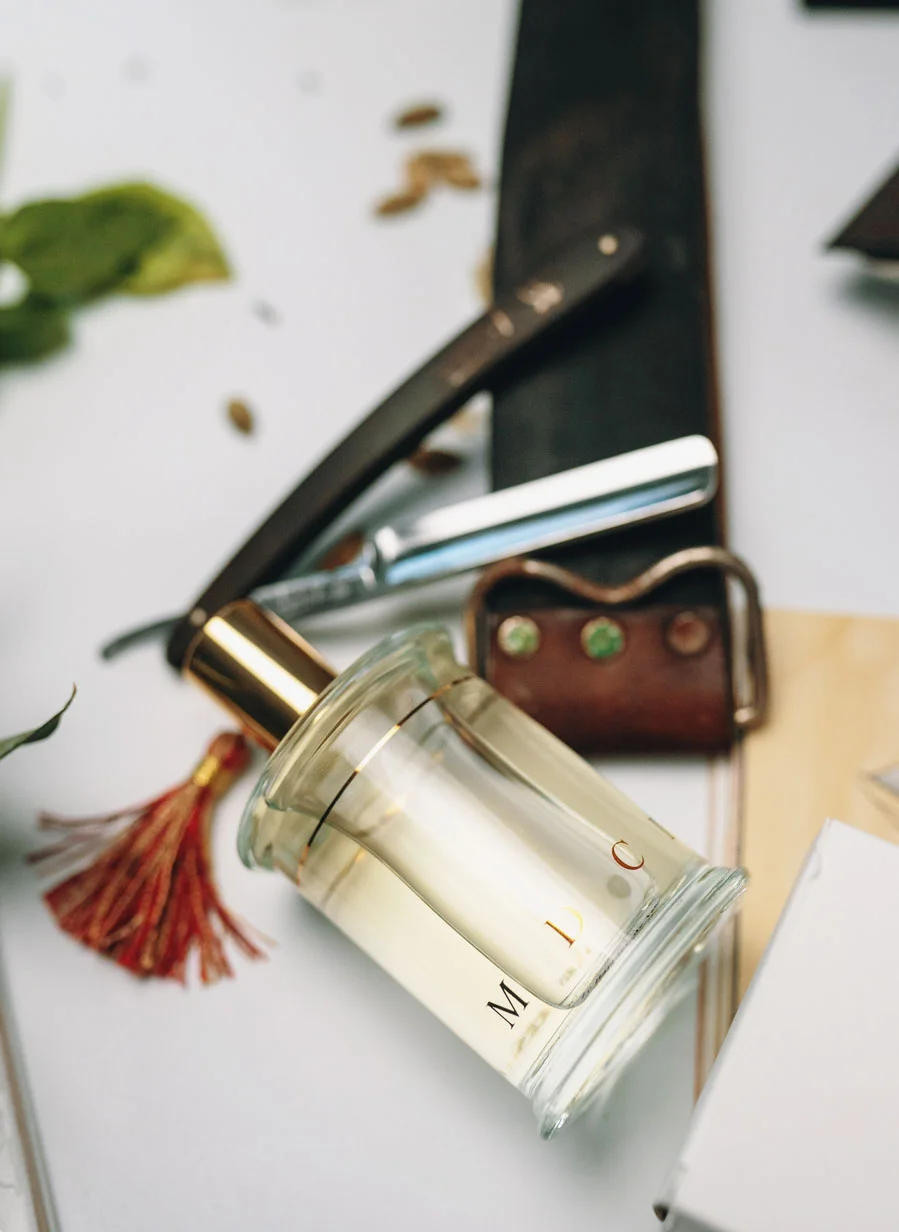
That separation creates an unusual commercial architecture. One customer can prioritize the complete sculptural object, while another can buy the fragrance in the simpler presentation. MDCI’s current catalogue even assigns different product codes to these formats.
For packaging buyers, the important observation is not simply that a cheaper and a more expensive pack exist. MDCI has made presentation itself a variable. The fragrance SKU and the packaging tier can move independently.
Silk Road Moves the Decoration Down Onto the Glass
The 100ml Silk Road Collection changes the mechanism of recognition. The classical bust disappears and the bottles become broader and more rectilinear. MDCI says their decoration draws on sixteenth-century Turkish textiles and Iznik ceramics and uses 18-carat gold or platinum.
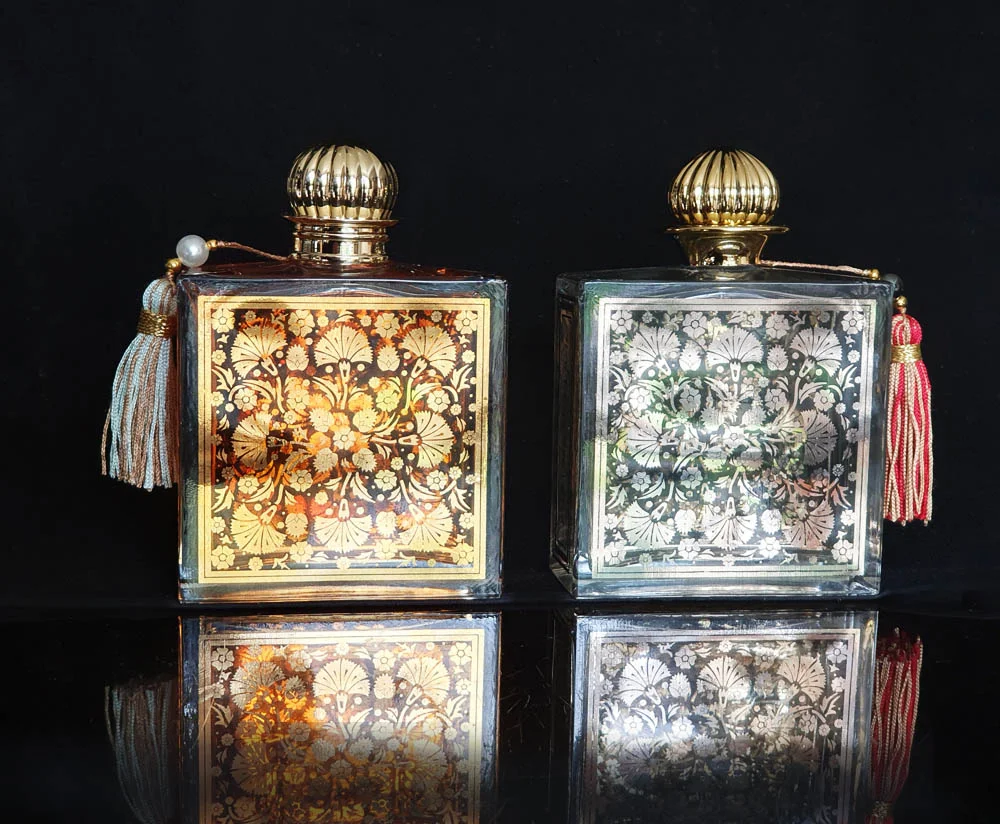
The historical-art reference therefore survives, but the packaging problem changes. In the Classic bottle, much of the identity is three-dimensional and concentrated at the top. In Silk Road, ornament becomes a large decorated plane across the body. The two ranges belong to the same worldview without relying on the same physical signature.
Painters and Perfumers Turns the Bottle Into a Frame
With Painters and Perfumers, MDCI makes the artwork more literal. The house commissions perfumers to respond to historical paintings and then reproduces those works on the bottles and packaging. The fragrance concept, image and physical presentation become linked at SKU level.
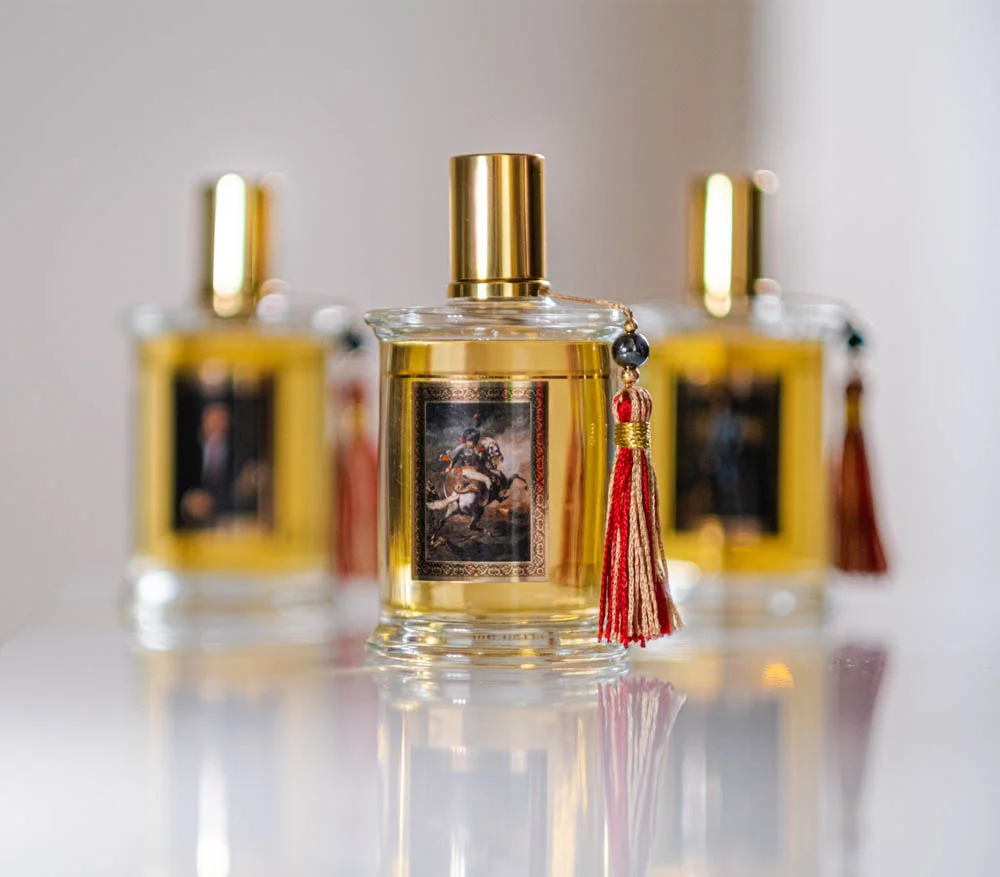
L’Homme aux Gants makes the mechanism especially easy to see. MDCI pairs the fragrance with Titian’s sixteenth-century portrait and reproduces the painting as a framed image on the cylindrical bottle.
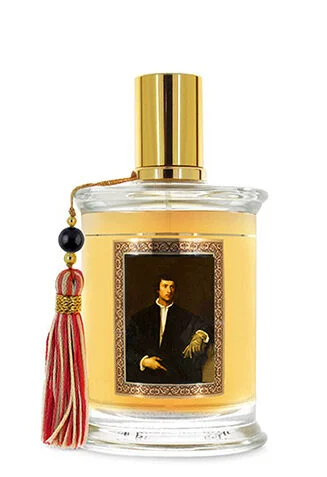
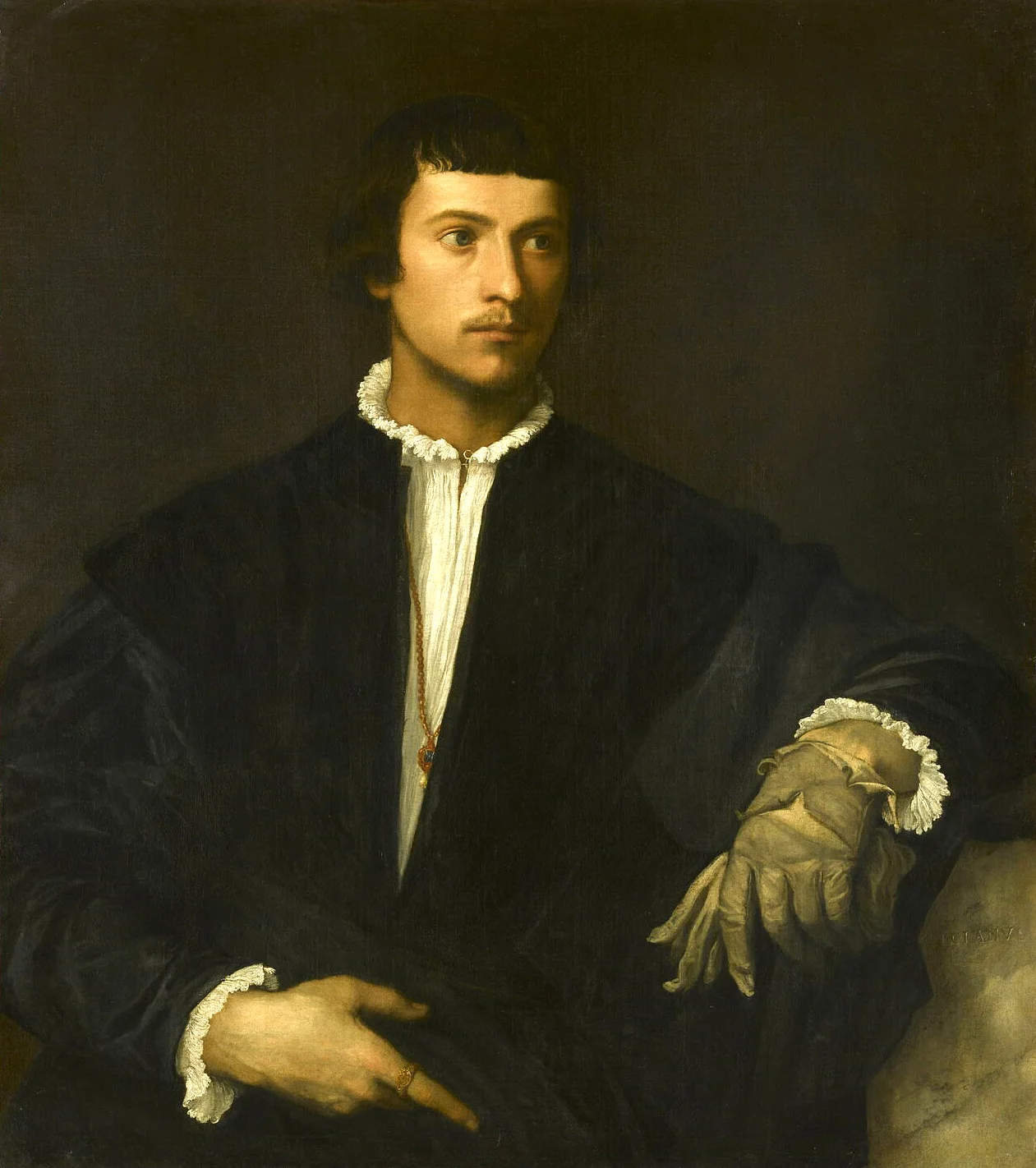
This differs from using art as general mood-board inspiration. Here, the chosen work remains visible in the final product. Packaging becomes part of how the customer identifies the fragrance rather than an independent decorative layer.
The Discovery Box Reveals a Much Plainer MDCI
MDCI’s sampling programme strips most of this theatre away. The current discovery set contains five 11ml samples chosen to the customer’s specifications. The small bottles use straightforward labels and sit in a simple fitted presentation box.
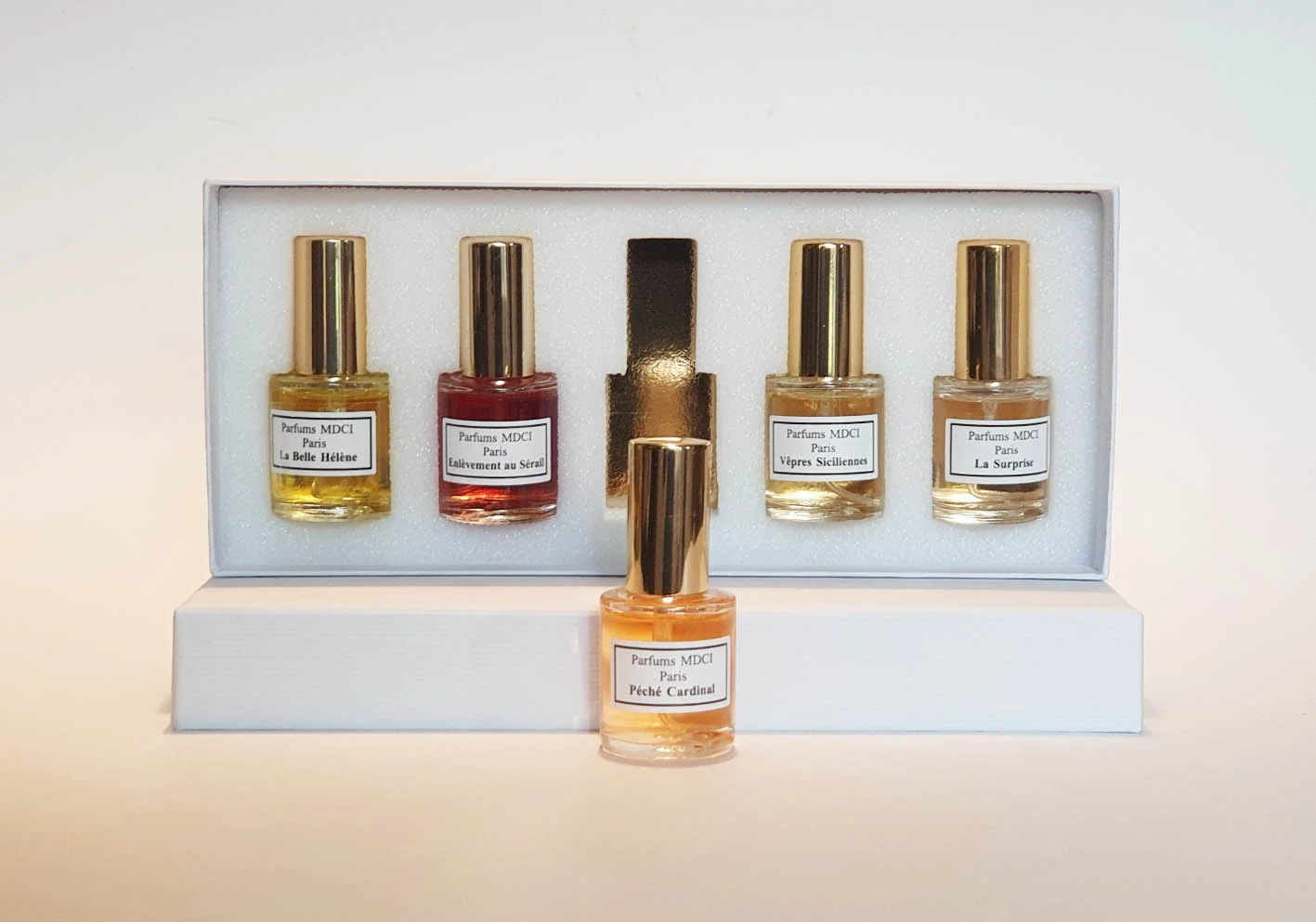
The operating model reinforces that flexibility. MDCI says its structure is very small, stock is limited, bottles are filled on demand and discovery boxes are assembled according to individual customer choices. This is not simply decorative eccentricity; presentation choice is built into how the company handles orders.
MDCI’s Brand Asset Sits Between Vessel and Collectible Object
It would be easy to reduce MDCI to its classical busts, because they are the most immediately recognizable part of the range. But the broader system is more revealing. The same house can place sculpture above a cylindrical flacon, remove it for a simpler tassel version, shift ornament onto a 100ml Silk Road bottle, reproduce a Titian painting on the glass or suppress almost all of that decoration for discovery sampling.
The common thread is not one bottle shape. It is the idea that presentation can carry different degrees and types of artistic value around the fragrance itself.
That returns to the unusual chronology. MDCI imagined the flacon before it formally built the perfume house. More than two decades later, the package still behaves not as a fixed shell around every fragrance, but as a variable space between functional container and collectible object.